
Regulated vs Unregulated Forex Brokers: What's the Difference?
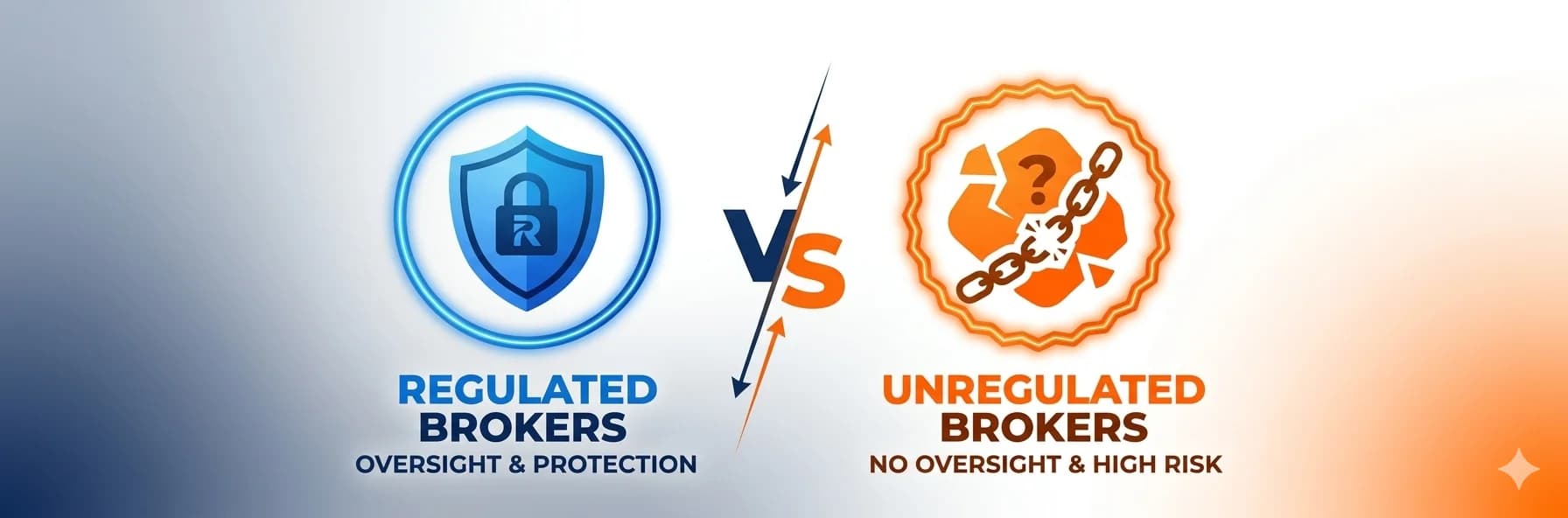
A regulated broker operates under a licensed financial authority that enforces rules, protects your funds, and gives you somewhere to go when something goes wrong. An unregulated broker doesn't. The difference only becomes obvious the day you need it, and by then it's usually too late to switch.
You're already trading. You have an account, you've made deposits, maybe you've withdrawn a few times without problems. But there's a question you haven't fully answered: is my broker actually safe?
That feeling is worth taking seriously.
This isn't a walkthrough of what regulation means for beginners. You probably already know the basics. What this covers is what actually separates a regulated broker from an unregulated one, what that difference costs you when something goes wrong, and how to check where your broker really stands before you find out the hard way.
Key Takeaways
- Not all regulation is equal. A license from FCA, ASIC, CySEC, or FSCA carries real weight. A license from an unknown jurisdiction is closer to a marketing label.
- The search ranking of a broker means nothing. The first result on Google might be a paid ad from a broker with no real regulatory history.
- Slippage on stop losses is more common than brokers admit. A $50 stop loss that costs you $110 is not a market issue. It is a broker issue.
- Regulated brokers are required to keep your funds in segregated accounts. With unregulated brokers, your deposit sits wherever they decide to put it.
- Review sites are unreliable. The only trust test that works is a personal referral from someone who has actually withdrawn, followed by your own small deposit and withdrawal.
- How a broker responds when something goes wrong tells you more about them than how they treat you when everything is fine.
- If a withdrawal takes too long or arrives with unexpected fees, that is useful information. Better to learn it with a small test deposit than with your full capital.
What "Regulated" Actually Means
A regulated broker operates under the legal oversight of a financial authority. That authority sets the rules: how client funds must be stored, how trades must be executed, what the broker must disclose, and what happens if a dispute arises.
The operative word is accountability. A regulated broker has a body it answers to. If a client raises a formal complaint, there's a process. If the broker breaks the rules, there are consequences: fines, license suspension, closure.
An unregulated broker answers to nobody.
That's not an exaggeration. Without a regulatory license, there is no external body enforcing fair execution, no requirement to keep client funds separate from company funds, and no dispute resolution process beyond whatever the broker voluntarily chooses to offer. Which, when money is on the line, is usually not much.
Not All Regulations Are Equal
Most articles treat regulation as a yes/no question. It isn't that simple. A broker can hold a valid license and still offer you almost no real protection, depending on who issued it.
The regulators that actually enforce things are FCA, ASIC, CySEC, and FSCA. They require segregated client accounts, minimum capital reserves, regular audits, and a functioning complaints process. If something goes wrong with a broker under one of these, you have somewhere to go.
Other jurisdictions issue financial licenses with minimal requirements and no real enforcement capability. Traders call these "flag of convenience" licenses. The broker is technically regulated. The license means about as much as a roadworthy certificate on a car with bald tires. The paperwork is real. The guarantee behind it isn't.
If you've never heard of the authority your broker is licensed under, look them up before your next deposit. Five minutes of research might change how you feel about where your money is sitting.
What Happens When Things Go Wrong
This is where the gap between regulated and unregulated stops being theoretical.
The Slippage Problem
Stop losses are supposed to protect you. You set a $50 risk on a trade, the market moves against you by that amount, your position closes, and you lose $50. That's the agreement.
Except sometimes the agreement isn't honored.
I experienced this personally. I was trading gold during a normal New York session, no major news, no extreme volatility, just standard conditions. My stop loss triggered. Instead of losing $50, my account was debited $110. More than double what I'd set as my maximum loss. When I contacted support to understand what happened, I got a response telling me not to trade during news hours. It wasn't a news hour. The response felt like a template. Like I was an inconvenience who needed to be closed out of the ticket queue.
That's when I left. Not because of the $60 difference. Because of what that response told me about how the broker saw its clients.
With a well-regulated broker, extreme slippage on a stop loss during normal conditions is something you can formally dispute. There's a process. There's a paper trail. With an unregulated broker, or a poorly regulated one, the support chat is often the end of the road.
The Withdrawal Block
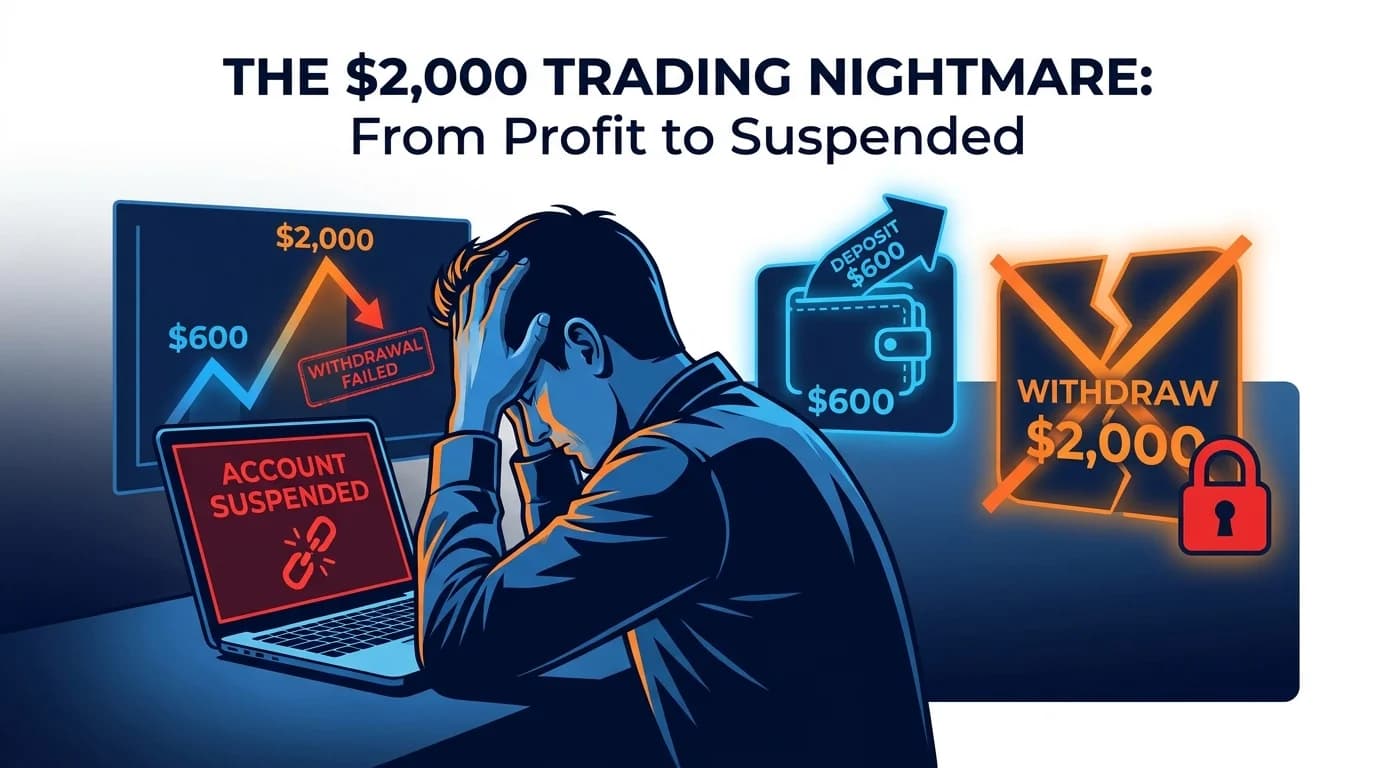
A trader I know deposited $600 with a broker, traded it up to $2,000, and then tried to withdraw his profits. His account was suspended immediately. The reason the broker gave: he had used arbitrage strategies. He hadn't. The account stayed blocked. The money was gone.
There was nothing he could do. No regulator to file a complaint with. No appeals body. The broker decided the money was theirs, invented a justification, and closed the conversation.
This isn't a rare horror story that circulates on forums. It's a recognizable pattern. And it almost exclusively happens with unregulated brokers, because regulated brokers face real, documented consequences for this kind of behavior.
How Traders End Up With the Wrong Broker
Most traders who end up with problematic brokers didn't make an obviously bad decision. They made a fast one.
The most common version: someone searches "best forex broker" or "best broker for gold trading," clicks the first result, sees a clean website with a live chat widget, creates an account, and deposits everything they have. What they don't know is that the first result might be a paid ad. The broker behind it might be six months old, operating under a license from a jurisdiction that couldn't meaningfully regulate a lemonade stand, and running on the assumption that most clients will lose money before they ever try to withdraw significant amounts.
A credible-looking website costs a few thousand dollars to build. An office address can be rented. Testimonials can be written. Awards can be purchased. None of that costs what a genuine regulatory license costs, and none of it comes with what a genuine license actually provides, which is the possibility of accountability.
The search ranking, the design, the number of instruments on offer: none of it tells you whether your capital is protected. Only the regulatory status does, and only if you verify it yourself.
The Trust Test Experienced Traders Actually Use
Most review sites are gamed. Ratings get inflated, testimonials get bought, and you have no way to tell. The method that actually works: find someone you know personally who deposited real money with that broker, traded it, and withdrew successfully. Not someone who signed up. Not a demo account user. Someone who completed the full cycle and got their money back without a fight.
Then run your own test before putting in serious capital:
- Find the broker's regulatory license on their website. Write down the regulator name and license number exactly as shown.
- Go to that regulator's public registry. FCA: register.fca.org.uk. ASIC: search.asic.gov.au. CySEC: cysec.gov.cy. FSCA: fsca.co.za.
- Check the license is active. Also verify the legal entity on the license is the same one actually holding your funds. Some brokers run multiple entities, and the regulated one isn't always the one you opened an account with.
- Look for confirmation that client funds are segregated. It should be in their legal documentation. If you can't find it, ask support and pay attention to how they respond.
- Make a small deposit. Trade it. Withdraw it. Time it.
I did this myself after switching brokers. The withdrawal arrived in under an hour. Zero fees. Not even a blockchain fee on the USDT transfer, which anyone who has moved crypto through a broker knows is not the norm. That told me more about how the broker operates than anything on their website ever could.
What Regulation Actually Protects
Regulation isn't only about what happens when things go wrong. It also determines how your money is handled when everything is fine.
Regulated brokers are legally required to keep client funds in segregated accounts, separate from the money they use to operate. If the broker goes bust, your capital isn't sitting in the same pot as company assets that creditors can claim. With an unregulated broker, your deposit goes wherever they decide to put it. No external requirement, no audit, no one checking.
Most serious regulated jurisdictions also require negative balance protection. Your losses can't exceed your deposit. In a flash crash or a sharp overnight gap on gold, that's not a small thing. Unregulated brokers have no obligation to offer it.
Fee transparency is required too. Spreads, commissions, swap rates all have to be disclosed clearly, and a regulated broker can't quietly change them on you. An unregulated one can adjust your account conditions with little warning and no formal obligation to tell you.
None of this takes away trading risk. But it changes what the ground beneath you actually looks like.
Red Flags Worth Knowing
You don't need a compliance background to spot warning signs. A few things that should make you stop:
The "regulation" page links to a jurisdiction you've never heard of. Spend five minutes looking up that regulator. What are their actual requirements? Do they have enforcement powers? Some authorities listed on broker websites are little more than registry offices with no oversight function.
Withdrawal requests trigger a sudden review. A legitimate broker processes withdrawals. If requesting a withdrawal suddenly requires additional documentation you've never been asked for before, or triggers an account review that conveniently delays things, that's not normal procedure. It's a stall.
Support can't answer a direct question about the license number. Ask. A legitimate broker's support team will give you the exact license number and regulator name without hesitation. If the answer is vague or you get redirected to a general page, that tells you something.
The bonuses are unusually large. Regulated brokers in major jurisdictions often face restrictions on what bonus offers they can make. A 200% deposit bonus is frequently the tool of a broker that competes on offers because it can't compete on execution or legitimacy.
How to Check If Your Broker Is Regulated Right Now
If you're not fully sure about your current broker, or you're looking at a new one, this is what to actually do.
Start with the license number. Find it on their website, usually in the footer or on a page labeled "regulation" or "legal."
Take that number and go to the regulator's own registry. Not a review site. Not a third-party checker. The regulator's actual search tool.
Confirm the license is active. Then check that the legal entity named on the license matches the one holding your funds. Most traders skip this part. Some brokers run multiple entities, and the regulated one isn't always the one your account sits under.
Then make a small deposit. Trade it. Withdraw it. Time how long it takes and watch for any fees you weren't told about. If everything goes smoothly, you have your answer. If it doesn't, you've paid a small price to find out something important before it became an expensive problem.
The Bottom Line
Regulation isn't a guarantee that your broker will always do the right thing. And it isn't protection against losing trades, bad timing, or your own risk management decisions.
What it is: the difference between having somewhere to go when something goes wrong, and having nothing. A regulated broker operates knowing there are consequences for bad behavior. An unregulated one operates knowing there aren't.
The $60 I lost to slippage wasn't what made me switch brokers. What made me switch was the response I got afterward, a template reply that treated my question like an inconvenience. That experience taught me something I now consider non-negotiable: how a broker behaves when something goes wrong is more important than how they treat you when everything is fine.
Check the license. Verify it yourself. Do the withdrawal test before you commit real capital. It takes an hour. Given what's at stake, that's not a difficult trade.
Frequently Asked Questions
Can I trade safely with an unregulated broker?
Technically yes, but you're taking on risks that have nothing to do with the market. Your capital isn't protected by any external authority, your trades can be executed however the broker decides, and if something goes wrong with a withdrawal or your account gets suspended, you have no formal recourse. Some traders use unregulated brokers for years without problems. Others lose everything on the first dispute. The difference is rarely skill. That's not a trade most experienced traders would take.
Is a regulated broker always better than an unregulated one?
Regulation from a serious authority, FCA, ASIC, CySEC, FSCA, is a meaningful advantage. But regulation from a low-quality jurisdiction is closer to a marketing label than a real protection. So the question isn't just "is this broker regulated?" It's "who regulates them, and does that regulator actually enforce anything?" A broker with no license at all and a broker with a license from an unenforceable jurisdiction are not meaningfully different from a risk standpoint.
What should I do if I think my broker is withholding my withdrawal?
First, document everything: screenshots of withdrawal requests, support conversations, account statements. If your broker is regulated by a legitimate authority, file a formal complaint directly with that regulator using their official complaints process. FCA, ASIC, CySEC, and FSCA all have documented procedures for this. If the broker is unregulated or regulated by an authority with no real enforcement power, your options are limited, which is exactly why verifying regulation before depositing matters more than most traders realize.
How long should a withdrawal take from a legitimate broker?
It depends on the method, but a fast broker on crypto or digital wallet withdrawals can get funds to you within an hour. Bank transfers naturally take longer. What should concern you is unexplained delays, sudden requests for documentation you've never been asked for before, or support responses that keep extending the timeline without a clear reason. When I switched brokers and ran my first test withdrawal in USDT, it arrived in under an hour with zero fees, including no blockchain fee. That's the standard a serious broker should be able to meet on digital withdrawals.
Does being regulated mean the broker can't profit from my losses?
Regulation and business model are separate things. Some regulated brokers operate as market makers and do take the other side of client trades, which is a legitimate, disclosed model. What regulation prevents is undisclosed manipulation, selective execution, and withholding funds. The broader point is that a broker serious about long-term business has more to gain from clients who trade consistently and profitably than from clients who blow up and disappear. Regulation enforces minimum standards of conduct; a good broker's interests are already aligned with yours before any regulator gets involved.