
CPI Explained: The 2026 Consumer Price Index Guide for Traders
The Consumer Price Index (CPI) is a monthly economic indicator that measures how much the prices of everyday goods and services change over time. It is one of the primary ways inflation is tracked in the United States and is closely watched by traders, investors, and central banks.

Key Takeaways
- CPI measures inflation by tracking price changes in everyday goods and services Americans buy.
- Higher-than-expected CPI typically strengthens the US dollar as it signals potential interest rate hikes.
- Core CPI excludes volatile food and energy prices, providing a cleaner inflation picture for policymakers.
- CPI releases happen monthly around the 10th-13th of each month, creating high-volatility trading opportunities.
- Gold and crypto markets react inversely to CPI—rising inflation often pushes investors toward traditional safe havens.
What is CPI in forex?
The Consumer Price Index tracks the average change in prices that urban consumers pay for a basket of goods and services over time. Think of it as a shopping cart filled with everything from apples to apartments, gas to gym memberships—basically, the stuff that makes up everyday American life. This critical economic indicator appears monthly on the Forex Factory calendar, where savvy traders track its release to capitalize on the market volatility it creates.
In simple terms, CPI shows whether the cost of living is going up or down. If CPI rises, it means consumers are paying more for things like food, housing, transportation, and healthcare. If it falls, it suggests prices are stabilizing or decreasing.
For traders and investors, CPI is more than just a measure of inflation. It directly influences interest rate decisions made by the Federal Reserve, which in turn impacts currency values, gold prices, and overall market sentiment.
Because of this, CPI is considered one of the most important economic indicators in financial markets, especially in forex trading where even small changes in expectations can lead to significant price movements.
The Anatomy of CPI: Breaking Down the Numbers
The Bureau of Labor Statistics doesn't just throw random items into their CPI basket. They've carefully constructed a representative sample that reflects how Americans actually spend their money:
| Category | Weight in CPI | Examples |
|---|---|---|
| Housing | 42.4% | Rent, utilities, furniture |
| Food & Beverages | 13.4% | Groceries, restaurants |
| Transportation | 16.8% | Gas, cars, public transit |
| Medical Care | 8.1% | Healthcare services, prescriptions |
| Recreation | 6.0% | Entertainment, sports equipment |
| Education & Communication | 6.9% | Tuition, phone services |
| Other Goods & Services | 6.4% | Personal care, insurance |
This breakdown matters because when oil prices spike, you'll see it reflected in both transportation costs and indirectly in food prices (transportation costs affect food distribution). Smart traders watch these interconnections.
Core CPI: The Fed's Favorite Inflation Gauge
Now, let's talk about Core CPI—the metric that really gets Federal Reserve officials excited (or worried). Core CPI strips out food and energy prices because they're more volatile than a crypto trader's portfolio during a market crash.
Why exclude food and energy? Simple. Gas prices can swing wildly due to geopolitical events that have nothing to do with underlying economic trends. A hurricane in the Gulf of Mexico can spike oil prices temporarily, but that doesn't mean the economy is overheating.
Core CPI gives policymakers—and smart traders—a cleaner picture of underlying inflationary pressures. When Jerome Powell talks about inflation targets, he's usually referencing Core CPI, not the headline number.
Here's a pro tip: Pay attention to the difference between headline CPI and Core CPI. When they diverge significantly, it often signals temporary factors at play rather than sustained inflationary trends.
How to trade CPI news
Trading CPI releases is like surfing—you need to catch the wave at exactly the right moment. The market typically starts positioning ahead of CPI announcements, but the real action happens in the minutes following the release.
Pre-Release Positioning: Reading the Market's Mind
Smart traders don't wait for CPI data to drop before forming their strategy. They analyze:
- Market expectations vs. recent inflation trends
- Fed communication leading up to the release
- Economic calendar positioning—what other major events are happening?
- Technical levels on major currency pairs
I've noticed that when markets are particularly uncertain about Fed policy direction, CPI releases create even more dramatic moves. It's during these times that positioning ahead of the release becomes most crucial.
The CPI Release Playbook
When that 8:30 AM EST release hits, here's what typically unfolds:
If CPI comes in higher than expected:
- USD typically strengthens across the board
- Bond yields often rise (prices fall)
- Gold usually sells off initially
- Risk-off sentiment may develop if inflation fears escalate
If CPI disappoints expectations:
- USD weakness, especially against risk currencies
- Bond yields may fall
- Gold often catches a bid
- Risk-on sentiment can develop
But here's the kicker—the initial reaction isn't always the whole story. I've seen plenty of CPI releases where the market's knee-jerk reaction gets completely reversed within hours as traders digest the broader implications.
Real CPI Trading Example: Managing Volatility in Live Market Conditions
There is one big difference between a novice trader and a seasoned trader: how uncertainty of CPI and other high-impact news events affects their strategy.
One such example is a recent Consumer Price Index (CPI) release. I was trading the precious metal XAU/USD at the time of the release, and I found myself in a SELL position which was performing admirably. I was already in for around 70 pips of profit, and any rational trader would have probably decided to either take profits or waited on for further confirmation of a trade continuation.
But CPI was only a few minutes away.
While most traders were implementing a STRONG DIRECTIONAL BIAS (mostly short) ahead of the CPI release, I approached the volatility inspired trade event from a slightly different angle. Rather than betting on a specific direction, I was focused on trade opportunity based on volatility levels. In this case, approximately 3 minutes before release, I decided to add a BUY for me to offset a SELL already in my portfolio.
CPI figures have been released and the market has moved sharply upwards, with the BUY position hitting its profit target almost immediately, and the SELL position retracing and posting a reduced gain.
Here is how the outcome looked:
- SELL position: +12 pips
- BUY position: +90 pips
- Total result: +102 pips
Now, I want to caution that this trade was not about the absolute number of pips gained or lost. Rather, it was about how I approached it, specifically how I managed expectations for CPI direction versus volatility. Remember, CPI news events are not just about the trade direction being correct. It is equally important to recognize how asset prices move in volatility, especially during major news releases.
In terms of trading the CPI, I find that experienced traders rarely just predict where it is going and instead just focus on whether the market will go up or down and then position themselves appropriately. It is then a matter of timing the move and seeing it unfold as they had planned.
I used to spend alot of time monitoring charts during news events and watching on a live feed for big movements in the price, but as my skills have improved, I no longer require this and can monitor a market such as the XAU/USD through an automated system of screens and alerts. This system works 24/7 and will alert me when the technical conditions on the XAU/USD are correct for me to enter a trade, whether it is during a CPI release or at any other time. This way I remain completely calm and make rational decisions when I do enter a trade.
For those trading around CPI, a key lesson is to not mise the number and instead focus on how volatility and risk may change based off of real market action as opposed to anticipated results.
CPI Meaning Explained: What It Really Means for Traders
What does CPI really mean for the average American? It's the difference between feeling financially comfortable and stretching every dollar. When CPI rises faster than wages, real purchasing power declines. This creates political pressure, influences consumer behavior, and ultimately shapes economic policy.
For forex traders, understanding this human element is crucial. High inflation isn't just a number—it represents millions of Americans feeling financial stress, which translates into political pressure on the Federal Reserve to act.
The Psychology Behind CPI Numbers
Markets don't just react to the math; they react to the story the numbers tell. A 0.1% miss on CPI expectations might seem trivial, but if it represents the third consecutive month of moderating inflation, it signals a trend that could reshape Fed policy for months ahead.
CPI News: Staying Ahead of Market-Moving Releases
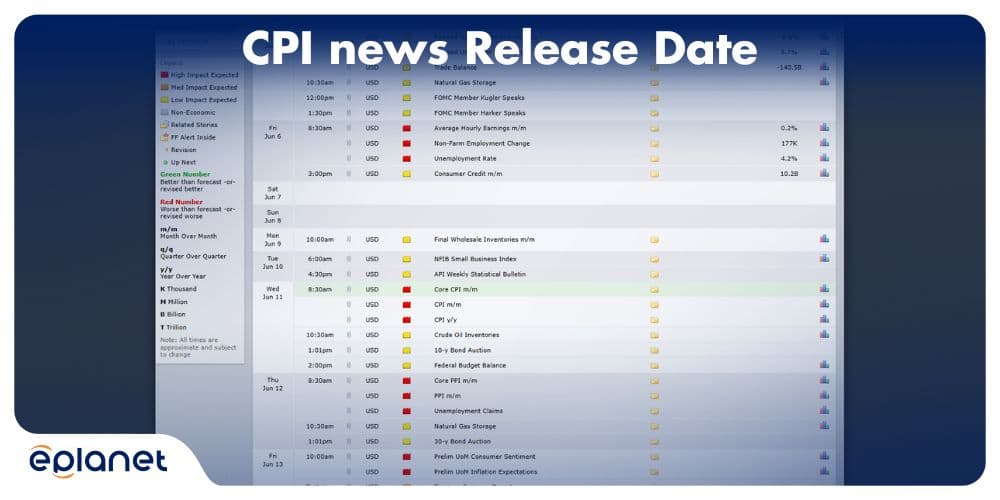
What time is the CPI released? CPI data drops monthly, typically between the 10th and 13th of each month at 8:30 AM Eastern Time. But smart traders know the preparation starts days before.
The release schedule follows a predictable pattern:
- Reference month data is released about 2 weeks after the month ends
- Preliminary estimates sometimes leak through other economic indicators
- Revisions to previous months can also move markets
Building Your CPI Trading Calendar
Week BeforeDay BeforeRelease DayPost-ReleaseMonitor Fed speechesCheck positioningExecute strategyAnalyze follow-throughReview technical levelsFinal prepManage riskPlan next tradeStudy consensus forecastsSet alertsWatch for reversalsUpdate thesis
Pro tip: Don't just focus on the headline number. The month-over-month change, year-over-year comparison, and core vs. headline divergence all matter. I've made some of my best trades by focusing on details other traders overlooked.
Trading Tool: Forex Economic Calendar
What Happens if CPI is Higher Than Expected?
When CPI comes in hot—higher than economists predicted—it's like throwing gasoline on the inflation fire. The market's immediate assumption? The Fed might need to get more aggressive with interest rates.
Here's what typically unfolds:
Immediate Market Reactions:
- USD strength as higher rates become more likely
- Bond selloff (yields rise) across the curve
- Equity weakness, especially growth stocks sensitive to rates
- Commodity complexity—some benefit from inflation, others suffer from demand destruction
But the real art is reading between the lines. Is this a one-off spike due to temporary factors, or part of a sustained trend? The answer determines whether you're looking at a quick scalp opportunity or a longer-term position.
Case Study: The Inflation Surprise Nobody Saw Coming
Remember March 2021? CPI came in at 2.6% year-over-year when economists expected 2.3%. Seems small, right? Wrong. That "small" miss marked the beginning of the inflation surge that dominated markets for the next two years. Early recognition of this trend shift created massive trading opportunities for those paying attention.
Is CPI the Same as Inflation?
Here's where things get nuanced. CPI measures inflation, but it's not inflation itself—it's one gauge of inflation. Think of inflation as the ocean and CPI as one of several instruments measuring its depth.
Other inflation measures include:
- Producer Price Index (PPI) - measures wholesale inflation
- Personal Consumption Expenditures (PCE) - the Fed's preferred inflation gauge
- Employment Cost Index - tracks wage inflation
- Import/Export Price Indexes - measure international price pressures
Why does this matter for trading? Because markets sometimes fixate on CPI while missing broader inflationary trends captured by other measures. Savvy traders monitor the whole inflation complex, not just CPI.
The Fed's Inflation Toolkit
The Federal Reserve actually prefers PCE over CPI for policy decisions. PCE accounts for substitution effects (when beef gets expensive, people buy chicken) and uses a different weighting methodology. But CPI gets more media attention, making it more market-moving in the short term.
How Will CPI Affect the Market?
The million-dollar question every trader asks before each CPI release. The honest answer? It depends on context more than the number itself.
Market context factors:
- Where are we in the economic cycle? Early expansion vs. late cycle makes a huge difference
- What's the Fed's current stance? Hawkish vs. dovish positioning changes everything
- How crowded are positioning? Overcrowded trades unwind violently
- What else is happening globally? CPI doesn't exist in a vacuum
Reading the Market's CPI Playbook
I've noticed patterns in how different market conditions affect CPI reactions:
- During economic uncertainty: Markets tend to overreact to CPI misses in either direction.
- During stable periods: CPI needs to significantly surprise to move markets.
- During Fed transition periods: Every data point gets magnified as markets seek policy clues.
The key is gauging market positioning ahead of time. When everyone expects a certain reaction, the opposite often happens.
How Often is the CPI Index Given?
CPI reports come monthly, but the impact varies significantly depending on timing and market conditions. The Bureau of Labor Statistics follows a strict schedule, but smart traders know that some releases matter more than others.
High-impact CPI releases typically occur:
- Before major Fed meetings
- During periods of policy uncertainty
- When markets are positioned for specific outcomes
- Following geopolitical events affecting energy prices
The CPI Release Rhythm
| Month | Typical Release Date | Market Impact Level |
|---|---|---|
| January | Mid-February | High (sets year tone) |
| February | Mid-March | Medium |
| March | Mid-April | High (Q1 summary) |
| April | Mid-May | Medium |
| May | Mid-June | High (mid-year check) |
| June | Mid-July | Medium |
| July | Mid-August | Medium |
| August | Mid-September | High (pre-Fed meeting) |
| September | Mid-October | Medium |
| October | Mid-November | High (election proximity) |
| November | Mid-December | High (year-end positioning) |
| December | Mid-January | High (full year data) |
How Does CPI Affect Crypto?
Cryptocurrency's relationship with CPI is complex and evolving. Traditional thinking suggested crypto would benefit from inflation as a hedge, similar to gold. Reality? It's more nuanced.
Bitcoin and major cryptocurrencies often:
- Initially sell off on higher-than-expected CPI (risk-off sentiment)
- Rally later if inflation fears drive currency debasement concerns
- Follow tech stocks more closely than gold during market stress
- React to Fed policy expectations embedded in CPI readings
The Crypto-CPI Connection
What I've observed is that crypto's reaction to CPI depends heavily on market maturity and institutional adoption. As more traditional investors enter crypto, its correlation with traditional risk assets has increased.
Current crypto-CPI dynamics:
- Short-term: Risk-off reactions dominate
- Medium-term: Inflation hedge narratives can drive buying
- Long-term: Adoption and regulation matter more than CPI
The smart crypto traders I know don't just trade the CPI number—they trade the Fed policy implications and broader macro shifts that CPI signals.
What Happens to Gold if CPI Increases?
Gold's relationship with CPI is one of the most fascinating dynamics in financial markets. Conventional wisdom says gold should rise with inflation—after all, it's the ultimate inflation hedge, right?
The reality is more complex:
Initial reaction to high CPI:
- Gold often sells off as real interest rates rise
- USD strength pressures gold prices
- Risk-off sentiment can drive Treasury buying over gold
Secondary reaction:
- If CPI fuels currency debasement fears, gold rallies
- Sustained inflation trends typically benefit gold long-term
- Geopolitical tensions amplify gold's inflation hedge appeal
Gold Trading Strategy Around CPI
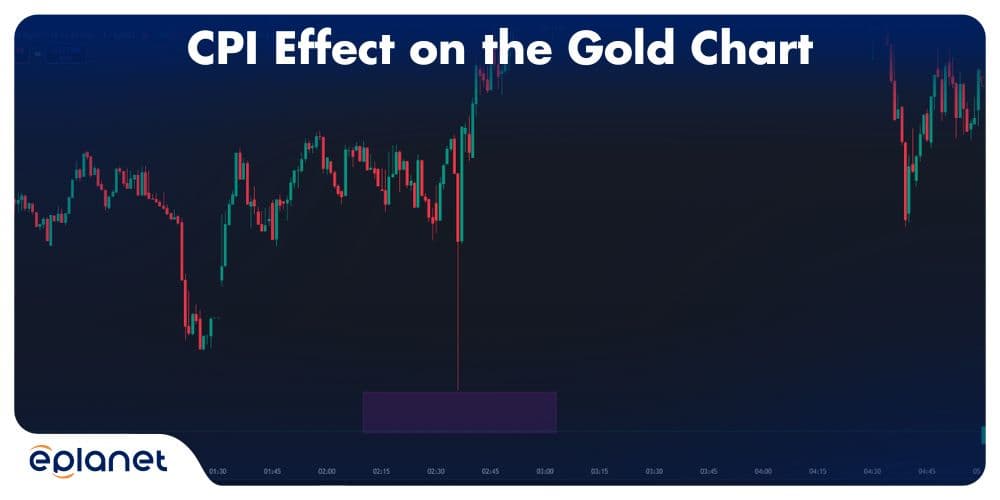
Here's my approach to trading gold around CPI releases:
- Pre-release: Look for technical levels and positioning clues.
- Immediate post-release: Fade the initial reaction if it seems overdone.
- Hours later: Watch for the "real" move as implications sink in.
- Days/weeks after: Monitor for trend continuation or reversal.
The key insight? Gold doesn't just react to inflation—it reacts to real interest rates (nominal rates minus inflation). High CPI with even higher rate expectations can actually hurt gold initially.
Read More: What is a trading strategy?
Advanced CPI Trading Strategies
Now that we've covered the basics, let's dive into sophisticated approaches that separate profitable traders from the crowd.
The CPI Divergence Play
One of my favorite strategies involves trading divergences between different CPI components. When services inflation runs hot while goods inflation cools, it often signals shifting economic dynamics that create trading opportunities across multiple asset classes.
Example scenario:
- Core services CPI accelerates (wage-driven inflation)
- Core goods CPI decelerates (supply chain normalization)
- Result: Fed focuses on services, potentially staying hawkish longer
This type of analysis helps you position not just for the immediate CPI reaction, but for the sustained policy implications.
Cross-Asset CPI Arbitrage
Smart traders don't just trade forex around CPI—they look for arbitrage opportunities across asset classes:
Bond-Currency Arbitrage: When CPI pushes bond yields higher but currency reactions lag, opportunities emerge in rate differentials between countries.
Equity Sector Rotation: High CPI often triggers rotation from growth to value stocks, creating opportunities in sector-specific ETFs and currency pairs tied to different economic sectors.
Building Your CPI Trading Edge
Success in CPI trading isn't about predicting the exact number—it's about understanding the market's reaction function and positioning accordingly.
The Professional CPI Trader's Checklist
Pre-release preparation:
- ✓ Check market positioning through COT reports.
- ✓ Review technical levels on major pairs.
- ✓ Understand current Fed policy stance.
- ✓ Monitor options flows for sentiment clues.
- ✓ Set up risk management parameters.
Release execution:
- ✓ Watch initial market reaction for overreactions.
- ✓ Monitor multiple timeframes simultaneously.
- ✓ Pay attention to bond market reactions.
- ✓ Look for follow-through in subsequent hours.
- ✓ Adjust position sizes based on volatility.
Post-release analysis:
- ✓ Evaluate trade thesis against actual results.
- ✓ Update medium-term market outlook.
- ✓ Prepare for next major economic release.
- ✓ Document lessons learned for future trades.
Risk Management for CPI Trading
CPI releases create volatile conditions that can quickly turn winning trades into disasters. Here's how professionals manage risk:
- Position sizing: Never risk more than 1-2% of capital on any single CPI trade.
- Time limits: Most CPI-driven moves complete within 4-6 hours.
- Stop placement: Use volatility-adjusted stops, not arbitrary levels.
- Correlation awareness: Don't over-leverage correlated positions.
Read More: Forex risk management strategies
The Future of CPI and Market Impact
As we look ahead, several trends are reshaping how CPI impacts markets:
- Technological disruption is changing how we measure and interpret inflation.
- Globalization effects complicate traditional CPI analysis.
- Central bank evolution means policy reactions may differ from historical norms.
- Market structure changes affect how quickly and dramatically markets react to CPI.
Adapting Your CPI Strategy
The most successful traders I know constantly evolve their CPI trading approach. What worked in 2020 might not work in 2025. Stay flexible, keep learning, and remember that markets are constantly adapting to new information and participants.
Key adaptation strategies:
- Monitor changing correlations between CPI and asset classes
- Study new market participants and their likely reactions
- Track technological impacts on inflation measurement and market reactions
- Watch for structural economic shifts that change CPI's significance
Frequently Asked Questions About CPI
What is a good CPI rate?
A “good” CPI rate depends on the broader economic context, but in the United States, the Federal Reserve generally targets around 2% annual inflation. This level is considered healthy because it reflects steady economic growth without excessive price increases.
If CPI rises significantly above this level, it may signal overheating in the economy and lead to tighter monetary policy. On the other hand, very low or negative CPI can indicate weak demand and potential economic slowdown.
Is high CPI good or bad?
High CPI is not inherently good or bad—it depends on the situation and duration.
In the short term, rising CPI can reflect strong consumer demand and economic growth. However, persistently high CPI reduces purchasing power, increases living costs, and often forces central banks to raise interest rates.
For traders, high CPI is typically associated with a stronger US dollar due to expectations of tighter monetary policy.
What happens when CPI decreases?
When CPI decreases, it indicates that inflation is slowing down. This can lead to expectations of lower interest rates or a more accommodative stance from the Federal Reserve.
In financial markets, a declining CPI often results in:
- Weaker US dollar
- Lower bond yields
- Increased risk appetite in equities and crypto
However, if CPI falls too quickly, it may signal economic weakness rather than stability.
What is the difference between CPI and inflation?
CPI and inflation are closely related, but they are not the same thing.
Inflation is the overall increase in prices across an economy over time. CPI is one of the primary tools used to measure that inflation by tracking the price changes of a specific basket of goods and services.
In simple terms, CPI is the metric, while inflation is the broader economic concept it represents.
When is CPI released each month?
CPI data is typically released monthly, usually between the 10th and 13th of each month at 8:30 AM Eastern Time.
This release is considered a high-impact economic event and often creates significant volatility in the forex, commodities, and equity markets. Traders closely monitor this timing to prepare their strategies in advance.
Why does CPI move the forex market?
CPI moves the forex market because it directly influences expectations around interest rates.
Higher-than-expected CPI increases the likelihood of rate hikes, which tends to strengthen the US dollar. Lower-than-expected CPI suggests a more dovish monetary policy, which can weaken the currency.
Since forex markets are highly sensitive to interest rate differentials between countries, CPI becomes one of the most important economic indicators for currency traders.
Conclusion
The Consumer Price Index isn't just another economic statistic—it's a window into the economic forces that drive currency movements, interest rate decisions, and market sentiment. Understanding CPI and its market implications gives you a significant edge in forex trading.
Remember, successful CPI trading isn't about perfectly predicting the number. It's about understanding market psychology, managing risk effectively, and positioning for the range of possible outcomes. The traders who consistently profit from CPI releases are those who do their homework, manage their risk, and remain flexible as market conditions evolve.
Whether you're trading the immediate volatility around CPI releases or using CPI trends to inform longer-term positioning, the key is developing a systematic approach that accounts for both the data itself and the market's likely reaction to that data.