
Why Learning Forex Before You Trade Can Save Your Capital and Keep You in the Market
Most traders lose money in the first 90 days not because the market is hard, but because they skipped the learning part. One of our team members lost $500 on a YouTube strategy he had never tested. He stayed with the chart for three hours after the loss, found a different pattern, and eventually grew a $5,000 account to $70,000. Education does not guarantee profits. It keeps you alive long enough to find your edge.

Most traders lose money in the first 90 days not because the market is hard, but because they skipped the part where they learned how it works.
That is the short answer. The longer one involves a $500 loss, three hours staring at a chart, and a $5,000 account that eventually became $70,000.
Two and a half years into trading, one of our team members watched a YouTube video about a simple entry method: three green candles, then short on the red one. Risk 30% of capital. He tried it. He lost $500. Instead of closing the platform, he stayed with the chart for three hours after the loss, not to recover, just to understand what had actually happened. In that session he found a completely different pattern. One that he later built into a scalping setup on XAU/USD, with a 70% win rate, that he still uses today.
The $500 was not the problem. Entering with 30% of capital on a strategy he had never tested was. That is the kind of mistake that education fixes.
The 90/90/90 rule is not a myth. Ninety percent of new traders lose 90% of their capital within the first 90 days. The reason is rarely that the market is too unpredictable. It is that most people enter too large, exit too late, and treat someone else's strategy as if it were their own. Learning forex before you trade does not guarantee profits. It gives you a real chance of still having capital when your actual edge starts to show up.
Key Takeaways
- Entering the market without proper training leads to high failure rates. Learning fundamental and technical analysis is crucial.
- Managing risk and capital effectively helps traders avoid heavy losses and sustain profitability.
- Emotions like fear and greed impact trading decisions; self-awareness and discipline are key.
- Practicing on demo accounts before live trading helps build real-world skills.
- Choosing a reliable broker with fair terms enhances trading success.
- They offer flexibility, leverage, and low capital entry but also involve risks.
- Staying updated with market trends and strategies improves long-term success.
The Importance of Learning Forex Before Starting to Trade
The Forex market presents traders with a complex and dynamic world. Entering this market without adequate knowledge and awareness is often likened to stepping into a raging river without a boat or oars. The importance of learning Forex lies in helping you become familiar with the fundamental concepts of this market. Concepts like currency pairs, pip, lot, leverage, spread, and different types of trading orders form the foundation of your activity here. For more details, check out our Ultimate Guide on the basic terms and principles of the Forex market.
With proper training, you can learn to recognize both technical and fundamental analysis tools and use them to predict price movements. Learning risk management is also extremely important. By controlling risk, you can protect your capital and prevent heavy losses.
In the past, participation in the Forex market was mostly limited to large financial institutions. However, today, with the expansion of the internet and online trading platforms, anyone can enter this market after completing Forex training courses. Yet this easy accessibility should not lead to oversimplification. The internet revolution has transformed the world of Forex trading. It is no longer necessary to rely on large financial institutions to enter this market. Anyone with a computer and internet access can reach this vast market. Still, this ease of access does not mean that the path to success in Forex is simple.
Statistics indicate that most novice traders fail in Forex. The 90/90/90 rule clearly illustrates this reality: 90% of new traders lose 90% of their capital within the first 90 days. Learning Forex is crucial in helping you avoid being among this 90%. With proper education, you can become familiar with essential market concepts such as different order types, Leverage, Spread, and risk management, thereby safeguarding your capital. Mastering technical and fundamental analysis is also of great importance. By becoming proficient in these methods, you can predict price movements and conduct more successful trades.
Prerequisites for Entering Forex
To succeed in the Forex market, you need a set of skills and tools. These form the foundation of successful trading and help you achieve profitability in this volatile market.
Learn Fundamental Analysis
Before entering the Forex market, you must become familiar with the concepts of fundamental analysis. Learning Forex through fundamental analysis helps you develop a comprehensive view of the market by examining economic fundamentals such as political news, central bank decisions, and economic indicators.
- Predict Market Trends: Learning fundamental analysis strengthens your ability to forecast market direction. By understanding political and economic events, you can better interpret market fluctuations and make more appropriate trading decisions.
- Minimize Investment Risk: By mastering fundamental analysis, you reduce your investment risk. This kind of analysis assists you in identifying currencies with growth potential and avoiding high-risk trades.
Additionally, staying updated with market news is crucial for success, and many traders rely on resources like Forex Factory Platform for its comprehensive economic calendar and active discussion forums.
Learn Technical Analysis
Before entering the Forex market, you must master a powerful tool called technical analysis. Technical analysis helps you identify market patterns and trends through careful study of price charts, enabling you to predict future price movements and make more strategic trading decisions.
Learning technical analysis is essentially about acquiring the ability to read the market’s language. By learning Forex and becoming proficient in this language, you can decode the hidden signals in charts and capitalize on profitable trading opportunities. Additionally, incorporating SMC Concept insights, such as analyzing the trading activities of institutional investors, can further refine your technical analysis, offering a clearer view of market trends and potential reversal points.
Up to this point, we’ve learned that success in Forex requires sufficient knowledge and skill in technical and fundamental analysis, risk management, and familiarity with basic concepts like currency pairs, pip, lot, and leverage. We’ve also understood that most novice traders lose their capital due to a lack of knowledge and an oversimplified view of the market, making Forex education crucial to avoid losses and increase the likelihood of success.
Learn Capital Management
Before stepping into financial markets, especially Forex, you must become thoroughly familiar with the concept of capital management. This concept has its own principles and rules, and there are various ways to implement it that you need to learn. Capital management essentially helps you control the risk of your trades and protect your capital. A deep understanding of capital management, along with learning Forex, dramatically boosts your chances of success in financial markets.
Take Traders’ Emotions and Market Psychology Seriously
On the path of learning Forex, in addition to financial, economic, and technical topics, we must journey into our inner world as well. Understanding your personality and individual psychology is one of the most important factors for success in this thrilling market. Before entering the real world of Forex and starting to trade, you have to be honest with yourself and get to know your personality and emotions well.
Are you patient or impatient? Can you remain calm in critical situations, or do you make decisions under the influence of excitement? Answering these questions helps you prepare for the market’s challenges.
In the clamor of the Forex market, emotions like fear, greed, hope, and despair can influence our decisions and steer us off the right path.
Continual Learning of the Forex Market
To survive in this competitive market and make a profit, you must keep up with the latest methods and information and always stay in the loop of learning Forex and practicing. This helps you develop a better understanding of the market.
Gain Experience in the Forex Market
Experience is the father of knowledge. In the process of learning Forex and acquiring skills, nothing can help you as much as hands-on experience. This truth applies to all fields of life, especially the complex and dynamic world of Forex trading.
To enter the Forex market and become a successful trader, you must combine theoretical knowledge with practical experience. Demo account allow you to familiarize yourself with the market environment and strengthen your trading skills without risking real capital.
So far, we’ve learned that to succeed in Forex, capital management is essential, and you must control your emotions. We’ve also highlighted the importance of continual learning and gaining practical experience through demo accounts.
The Dangers of Entering Forex Without Proper Instruction
Entering the market without learning Forex is like stepping into a minefield. Losing capital is the first risk that comes to mind, but the psychological and emotional damage from such a loss can be deeper and longer-lasting.
Imagine jumping into a trade without any preparation and losing your capital. Then, after the fact, you discover a simple method that could have prevented this loss. The resulting feelings of blame and regret could discourage you from ever returning to the Forex market. Even if you decide to continue, you might become overwhelmed by a sea of Forex training materials, wasting time and energy on non-essential topics. Instead of progressing step by step with proper planning and targeted training toward success in Forex, you get stuck in a vicious cycle of failure and disappointment.
A Real Example of What Proper Training Actually Does
Most traders who blow their first account follow the same pattern. They find a setup that looks convincing, usually from a YouTube video or a trading group, and enter too large. No system. No real testing. Just confidence borrowed from someone else's results.
One trader did exactly this. Two and a half years into trading, with a $2,700 account, he came across a video explaining an entry method based on a red candle appearing after three consecutive green candles on the 1-minute chart. He entered with 30% of his capital.
He lost $500.
Instead of closing the platform, he stayed with the same chart for three hours. Not to recover. Just to understand what had actually happened. In that session, he found a completely different pattern. One based on price rejection at a specific level on the 5-minute chart, which he later called the HH Scalp Setup.
His first trade using that framework came ten minutes before a major news release. High risk by any measure. Price moved sharply in his favor and he closed with a $900 profit.
Over the next two years, refining that setup on XAU/USD, he grew a $5,000 account to over $70,000. A 1,400% return. Enough to buy a house and a car.
The $500 loss was not the real problem. Entering with 30% of capital, on a strategy he had never tested, was. Training teaches you what to look for, yes, but more importantly it teaches you how much to risk and when not to trade at all.
Traders who fail in the first 90 days are rarely failing because the market is too hard. They are failing because they skipped that part.
The Role of Brokers in the Forex Market
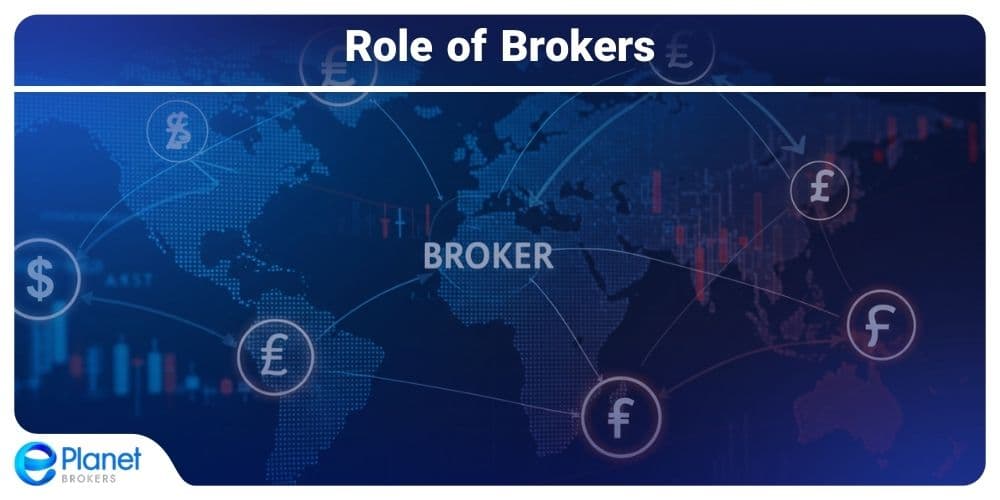
In the world of currency trading, brokers act as the bridge between you and the massive Forex market. These intermediaries provide access to trading platforms, enabling you to buy and sell currencies in a highly volatile market.
Besides providing a trading platform, brokers have other responsibilities. They execute your trades, maintain your accounts, and offer support when needed. Some brokers go even further, offering additional services like analytical tools, trading signals, and Forex training courses.
Choosing the right broker is crucial for your success in the Forex market. Brokers differ in terms of credibility, costs, trading platforms, and support services. Before selecting a broker, do your research and pick one that aligns with your needs and experience level. With a reliable Forex broker and their services, you can enter the Forex market with greater peace of mind and work toward your financial goals.
For Whom Are CFD Trades Suitable?
Because of their flexibility and numerous advantages, CFDs attract a wide range of traders. But who are these trades most suitable for? Below, we’ll examine the advantages and disadvantages of CFDs in Forex.
- Short-Term Traders: CFDs are ideal tools for short-term traders and those looking to profit from rapid price fluctuations. One advantage of CFD trading in Forex is the ability to use leverage, allowing traders to control larger positions with less capital. This can increase potential profits from small price movements, but remember, leverage also increases risk correspondingly.
- Traders With Limited Capital: Thanks to the possibility of trading with low capital, this point is no longer among the disadvantages of CFD trading in Forex, and individuals can enter the Forex market with minimal funds. CFDs enable traders to operate in various markets with limited capital. Leverage in CFD trades increases a trader’s purchasing power, letting them open larger positions with a smaller amount of money.
- Professional Traders: Professional traders who want to diversify their portfolios and access global markets can benefit from CFDs. These instruments allow trading in a wide range of assets, including stocks, indices, currencies, and commodities.
- Those Seeking Flexible Trades: CFDs offer high flexibility to traders. They can trade in both directions of the market (bullish and bearish) and profit from either rising or falling prices. Moreover, the risks of CFD trading are often lower than those associated with other financial instruments.
Conclusion
In this article we looked at why learning forex is so important and what can happen if you start trading without knowing what you are doing. We said that you really need to understand fundamental analysis be careful with your money and keep your emotions in check if you want to do well. We also talked about how important it's to choose a good broker.
Forex can be a way to make money but it is also very risky. If you take the time to learn about forex keep learning and work hard you can increase your chances of doing and reach your financial goals with forex. Learning forex and understanding forex is the key to success, with forex.
Frequently Asked Questions
How long does it take to learn Forex trading?
There is no fixed timeline. Most traders spend between six months and two years before trading consistently with real money. The speed depends on how seriously you approach education, how much time you dedicate to practice on a demo account, and whether you focus on risk management from the beginning. Traders who skip the fundamentals and move to live trading too early tend to lose capital and have to restart.
Can I start Forex trading with $100?
You can start trading on the forex market with an amount as low as $100. Although, most of the forex brokers enable their clients to open an account with a deposit of a small deposit to start trading online (e.g. eplanet brokers offers online trading accounts to start with just a $30 deposit). The smaller the initial deposit the bigger the constraints on the size of the positions trader can open. For a newbie trader this actually can be very good, as he will be able to trade consistently and slowly gain profits, without big losses, which are typical for less experienced traders.
What is the 90/90/90 rule in Forex?
The 90/90/90 rule is a widely referenced observation in retail trading: 90% of new traders lose 90% of their capital within the first 90 days. It is not an official statistic from a single source, but it reflects a real pattern. ESMA data on retail CFD accounts consistently shows that between 74% and 89% of retail accounts lose money. The main reasons are poor risk management, trading without a tested strategy, and entering positions that are too large relative to account size.
Is demo account trading useful for beginners?
Yes. The demo account simulates the real market conditions. Trading on a demo account is useful for the beginners. However, you should take it seriously. Many new traders make the mistake of trading on the demo account carelessly, with very large position sizes that they would never take in a real trading account. Then, on top of that, they do not manage to risk properly. If you make such mistakes on the demo account, you will be bringing them to your live account as well. So, treat the demo account the same as you would a live trading account.
What should I look for when choosing a Forex broker?
Regulation is the first thing to check. A regulated broker operates under rules that protect your funds and require transparent pricing. After that, look at their execution quality (note that low spreads do not necessarily mean best broker for you). Also note that a broker with slightly higher spreads but best execution is much better for you than a broker that promotes low spreads but have spreads widen up dramatically during normal market hours.