
Day Trading Explained: The Ultimate Guide for Modern Forex Traders
Day trading is a short-term trading style where positions are opened and closed within the same day to profit from small price movements in markets like forex, stocks, gold, or crypto, without holding trades overnight.

Introduction: What Day Trading Actually Looks Like
A few years back, two and a half years into trading, I thought I had found something real. A YouTube video described entering with 30% of capital when a red candle appeared after three strong green candles on the one-minute chart. It looked clean. Logical, even. I executed it exactly as described and lost $500.
I didn't close the platform. I sat with the chart for three hours. I wanted to understand what happened, not just feel bad about it. Somewhere in that session I spotted a different pattern, one that eventually became my primary scalping setup on the five-minute XAU/USD chart. First trade using it was ten minutes before a CPI release. No stop loss. No take profit. The CPI dropped price hard in my favor and I made $900 on that one trade.
Over the next two years I grew a $5,000 account to over $70,000 trading that same setup.
The $500 loss is the part that mattered. Not the $900, not the $70,000. That loss was the first time I actually studied a chart instead of just reacting to it.
Day trading means buying and selling financial instruments within the same session. Positions open, positions close, no overnight exposure, no waiting months for a thesis to resolve. The feedback comes fast. So do the consequences.
That speed is the whole problem. Studies consistently show 80 to 90 percent of day traders lose money, and it's not usually because they picked the wrong indicator or missed a news event. It's because they had no structure, no real risk management, and less experience than they thought they did.
This guide is an honest look at how day trading works, what it actually takes to survive it, and what most people find out too late.
Key Takeaways
- Capital Requirements Matter: You'll need substantial starting capital—most successful traders recommend at least $25,000 to comply with PDT rules and manage risk effectively.
- Education Trumps Luck: Successful day trading requires intensive education, practice, and continuous learning—it's not gambling if done correctly.
- Risk Management Is Everything: The difference between profitable and broke traders often comes down to disciplined risk management and position sizing.
- Technology and Speed Are Crucial: Your trading platform, internet connection, and execution speed can make or break your profitability.
- Psychological Resilience Is Non-Negotiable: The mental game of handling rapid wins and losses will test your emotional stability daily.
What Is Day Trading?
Let's strip away the Hollywood glamour and get down to brass tacks. Day trading is the art and science of buying and selling financial securities within a single trading day. Unlike your grandfather's buy-and-hold strategy, day traders close all positions before the market closes, avoiding overnight risk.
Think of it like this: if investing is like planting an oak tree and waiting decades for it to grow, day trading is like being a farmer at a bustling produce market—you're buying and selling constantly, making small profits on each transaction, hoping they add up to something substantial by day's end.
The Day Trading Landscape: More Than Just Stocks
While many people think day trading only involves stocks, the reality is far more diverse:
Stock Day Trading: The classic approach, focusing on individual company shares and ETFs. Popular choices include high-volume stocks like Apple, Tesla, and Amazon.
Forex Day Trading: Currency pairs like EUR/USD, GBP/USD, and USD/JPY offer 24-hour trading opportunities with massive liquidity in the Forex Market.
Futures Trading: Contracts for commodities, indices, and currencies that provide leverage and extended trading hours.
Cryptocurrency Trading: The wild west of day trading, with Bitcoin, Ethereum, and altcoins offering extreme volatility and 24/7 markets.
Options Day Trading: Complex strategies involving puts and calls that can amplify both gains and losses dramatically.
How Much Do Day Traders Actually Make?
This is the question most people come here to answer. It is also the one that gets answered most dishonestly.
Tables showing a $10,000 account producing $2,000 to $10,000 per month are everywhere. They have no source. They are not based on audited results or any broker data. And they tend to appear in the same articles that mention, a few paragraphs earlier, that 80 to 90 percent of day traders lose money. Nobody addresses the contradiction.
If most traders lose money, a projection of 20 to 100 percent monthly returns is not a planning tool. It is just noise.
Here is what actual numbers look like.
A trader with a structured system and real experience in a specific instrument can target around 10 percent account growth per month in a reasonable month. Not every month. Not as a floor. As a rough ceiling for what disciplined, experienced trading looks like in practice. At a consistent 1:2 risk-to-reward ratio with a 50 percent win rate, the math supports profitability even without anything going particularly well.
A longer reference point: one trading account started at $5,000 and grew to over $70,000 over roughly two years using a single repeatable setup on XAU/USD. That is around 1,400 percent over two years. It was not a straight line. There were losing months. There were periods where the setup was adjusted. The growth came from compounding a reliable edge, not from swinging bigger when things went well.
The traders who manage consistent monthly returns tend to share a few habits. They trade instruments they actually understand, usually one or two. They risk between one and five percent per trade. They have a daily loss limit and they respect it. A good month does not make them change their position sizing.
What account size do you actually need?
The regulatory minimum for pattern day traders in the United States is $25,000. That is not enough to generate meaningful income if you are managing risk properly. Two percent risk per trade on a $25,000 account means $500 maximum exposure per trade. A ten percent monthly return is $2,500 before tax and fees. That is real money, but it is not an income in most places.
Traders who rely on day trading as their primary income are generally working with $100,000 or more. Below that, generating consistent income means taking on more risk than most strategies can absorb over time.
None of this is meant to talk you out of it. It is meant to give you an accurate picture before you decide how much capital to commit and what you are actually trying to build.
Trading involves significant risk of loss. Past performance is not a reliable indicator of future results. The figures above reflect individual trader experiences and should not be treated as projections.
Read More: What is the Forex Market? How Can You Make Money From It?
The Day Trading Starter Pack: What You Actually Need
Capital Requirements: More Than You Think
Let's talk money—specifically, how much you need to start. I'll be brutally honest: if you're asking "Can I start day trading with $100?" you're not ready. Here's why:
The Pattern Day Trader (PDT) Rule: In the US, if you make more than three day trades in a five-day period, you need a minimum of $25,000 in your account. This isn't a suggestion—it's federal law.
Realistic Starting Amounts:
- Minimum viable: $25,000 (to comply with PDT rules)
- Comfortable starting point: $50,000-$100,000
- Professional level: $100,000+
Essential Tools and Technology
Your trading setup is your weapon in this financial battlefield. Skimping here is like bringing a knife to a gunfight:
Trading Platform: Choose wisely—this is your mission control
- For Beginners: TD Ameritrade's Thinkorswim, E*TRADE
- For Professionals: Interactive Brokers, TradeStation
- For Forex Focus: MetaTrader 4/5, cTrader
Hardware Requirements:
- Computer: High-performance desktop with at least 16GB RAM
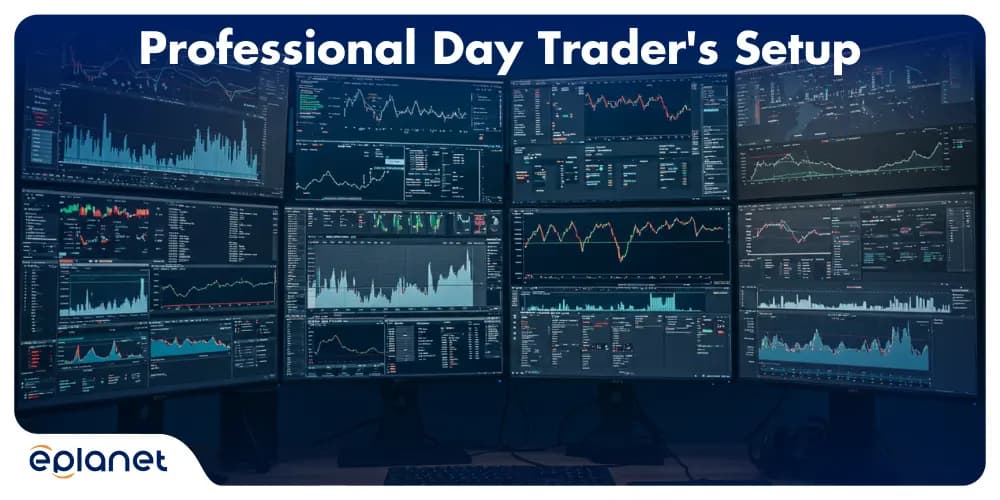
- Monitors: Minimum dual monitors (many pros use 4-6 screens)
- Internet: Redundant high-speed connections (fiber + backup)
- UPS System: Uninterruptible power supply for crucial moments
Software and Data:
- Real-time market data feeds
- Charting software with technical indicators
- News feeds and economic calendars
- Risk management tools
Read More: Best MACD Settings for Day Trading
Day Trading Strategies: Your Playbook for Success
Scalping: The Art of Tiny Profits
Scalping is like being a hummingbird in the trading world—quick, precise, and constantly moving. Scalpers make dozens or even hundreds of trades per day, targeting tiny price movements of just a few cents or pips.
How It Works: You're looking for small price discrepancies and brief momentum shifts. Hold times range from seconds to minutes.
Profit Targets: Typically 0.1% to 0.5% per trade.
Risk Level: High frequency, moderate individual risk.
Time Commitment: Full-time attention required.
Momentum Trading: Riding the Wave
This strategy is like surfing—you wait for the perfect wave (strong price movement) and ride it as long as possible. Momentum traders capitalize on significant price moves caused by news, earnings, or market sentiment.
Key Indicators:
- Volume spikes
- Breaking through resistance/support levels
- Gap openings
- News catalysts
Typical Hold Time: 30 minutes to several hours.
Profit Targets: 1-3% per successful trade.
Range Trading: Playing the Bounce
Range trading is the tortoise of day trading strategies—steady, methodical, and surprisingly effective. You identify stocks or currencies trading within a specific range and buy at support, sell at resistance.
Best Markets: Sideways-trending, low-volatility conditions.
Risk Management: Clear stop-losses below support/above resistance.
Success Rate: Often higher than momentum strategies but with smaller profits.
Breakout Trading: Catching Lightning in a Bottle
Breakout trading is about identifying when a security is about to explode out of its current price range. It's like waiting for a pressure cooker to blow—when it happens, the results can be spectacular.
Chart Patterns to Watch:
- Triangles (ascending, descending, symmetrical)
- Rectangles and flags
- Head and shoulders formations
- Cup and handle patterns
The Psychology of Day Trading: Your Mind Is Your Biggest Enemy
Here's something most trading courses won't tell you: technical analysis and strategy are just 30% of successful day trading. The other 70%? It's all mental.
The Emotional Roller Coaster
Day trading will test every fiber of your psychological being. One moment you're on top of the world, the next you're questioning every life choice that led you here. I've seen grown men cry over losing streaks and others become dangerously overconfident after a few lucky wins.
Common Psychological Pitfalls:
FOMO (Fear of Missing Out): That burning need to jump into every trending stock, even when you know you're late to the party.
Revenge Trading: When you try to "get even" with the market after a loss, usually leading to bigger losses.
Overconfidence: Three winning trades in a row and suddenly you think you're the next Warren Buffett.
Analysis Paralysis: Overthinking every trade until the opportunity passes you by.

What Revenge Trading Actually Looks Like
Most articles describe revenge trading as a mistake to avoid. Few show you what it actually looks like when it happens.
I watched this one from the broker side. A trader with a $2,000 account was trading DOW Jones. Over roughly three hours he lost everything in it. Not a bad week. Not a slow drawdown. Three hours.
He deposited another $2,000 that same day and clawed back around $300. From the outside that might look like discipline. It was not. He was still down $1,700, and whatever decisions he was making at that point had nothing to do with his trading plan.
His account went inactive for almost a month. When someone checked in later, it came out that the $2,000 was not risk capital. It was savings. He came back three months later, lost another $400, and quit for good.
The original loss did not finish him. The emotional state he was in after the loss finished him.
This matters because most risk management advice focuses on the trade: position size, stop loss placement, risk-to-reward ratio. That is all useful. But it assumes the person executing the trade is in a stable emotional state. After a large loss, most people are not. They increase size trying to recover faster. They open positions immediately after closing losers. They are no longer trading a setup. They are reacting.
If you catch yourself doing any of that, closing the platform is the right trade. It is also the hardest one to make.
Building Mental Resilience
The most successful day traders I know treat their emotions like they treat risk—they manage them systematically:
Keep a Trading Journal: Document not just your trades, but your emotional state during each one. Patterns emerge quickly.
Develop Rigid Rules: When emotions run high, fall back on predetermined rules. No exceptions.
Practice Meditation: Sounds new-age, but mindfulness training significantly improves trading performance.
Take Regular Breaks: Step away from the screens. Go for a walk. Clear your head.
Risk Management: The Difference Between Surviving and Thriving
Let me share a hard truth: risk management isn't glamorous, but it's the reason some traders drive Lamborghinis while others drive Ubers to pay the bills.
Position Sizing: The Golden Rule
Never, and I mean never, risk more than 1-2% of your total account on a single trade. This isn't just a suggestion—it's the cardinal rule that separates professionals from gamblers.
Example: With a $50,000 account, your maximum risk per trade should be $500-$1,000. This means if you're buying a $100 stock, you can afford to lose $5-$10 per share, so your stop-loss should be set accordingly.
Stop Losses: Your Financial Parachute
A stop-loss is exactly what it sounds like—it stops your losses from spiraling out of control. Yet amazingly, many novice traders skip this crucial step, hoping their losing trades will "come back."
Types of Stop Losses:
- Percentage-based: Set at a specific percentage below your entry price
- Technical-based: Placed below support levels or key technical indicators
- Time-based: Exit after a predetermined time period regardless of profit/loss
- Trailing stops: Move up with the stock price, locking in profits
The Risk-Reward Ratio: Your North Star
For every dollar you're willing to lose, you should have the potential to make at least two. This 1:2 risk-reward ratio means you can be wrong 60% of the time and still be profitable.
Example Calculation:
- Entry price: $50
- Stop loss: $48 (risk = $2)
- Target price: $54 (reward = $4)
- Risk-reward ratio: 1:2 ✓
Common Day Trading Mistakes: Learn from Others' Pain
Mistake #1: Treating Day Trading Like Gambling
The biggest mistake new traders make? Thinking day trading is a casino where you just need to get lucky. I've watched countless traders blow through their accounts because they approached trading like they were playing slots in Vegas.
The Fix: Develop a systematic approach with rules, backtesting, and statistical analysis.
Mistake #2: Inadequate Capital
Starting with insufficient capital is like trying to fight Mike Tyson with one hand tied behind your back. You're at a massive disadvantage from day one.
The Problem: Small accounts can't handle normal market volatility without violating proper risk management principles.
The Fix: Save up adequate capital or consider swing trading until you can fund a proper day trading account.
For a better understanding, we recommend reading our article on Which Forex Account Type Is Best for Day Traders?
Mistake #3: Overtrading
More trades don't equal more profits. In fact, overtrading is often a symptom of gambling addiction disguised as investment strategy.
The Warning Signs: Making trades out of boredom, chasing every market movement, or trading without clear setups.
The Fix: Quality over quantity. Wait for high-probability setups that meet your criteria.
Mistake #4: Ignoring Commissions and Fees
Death by a thousand cuts is real in day trading. Those $4.95 commission fees might seem small, but they add up quickly when you're making dozens of trades daily.
The Math: 100 trades per month at $5 per trade = $500 in commissions alone. Your strategy needs to overcome this hurdle just to break even.
Technology and Tools: Your Trading Arsenal
Charting Software: Your Crystal Ball
Professional day traders live and die by their charts. The right charting software can mean the difference between spotting a profitable opportunity and missing it entirely.
Essential Features:
- Real-time data feeds
- Multiple timeframe analysis
- Custom technical indicators
- Pattern recognition tools
- Backtesting capabilities
Top Platforms:
- TradingView: Beautiful interface, social features, web-based
- MetaTrader 4/5: Forex-focused, algorithmic trading support
- Thinkorswim: Comprehensive, institutional-grade features
- NinjaTrader: Advanced charting, automated trading strategies
Market Scanners: Your Opportunity Finder
With thousands of tradeable securities, how do you find the ones moving in your favor? Market scanners are your answer—they filter the entire market based on your specific criteria.
Scanning Criteria Examples:
- Volume: Stocks trading 2x average volume
- Price: Gapping up/down more than 5%
- Technical: Breaking above 50-day moving average
- Fundamental: Earnings announcements today
News and Data Feeds: Information Is Power
In day trading, information is literally money. The difference between knowing about a breaking news story 30 seconds before the crowd can be worth thousands.
Essential Information Sources:
- Bloomberg Terminal: The gold standard (expensive)
- Reuters: Real-time news and data
- CNBC: Market-moving television coverage
- Twitter: Increasingly important for market sentiment
- Economic Calendars: Know when major data releases occur

The Legal and Regulatory Landscape
Pattern Day Trader Rules
The PDT rule isn't just a suggestion—it's federal regulation that can shut down your trading account if violated:
The Rule: Making more than three day trades in any five-business-day period requires maintaining a minimum $25,000 account balance.
Violations: Your account gets flagged, and you'll be restricted to closing positions only for 90 days.
Workarounds:
- Trade with multiple brokers (risky and complicated)
- Focus on swing trading (hold positions overnight)
- Use a cash account instead of margin (limits buying power)
Tax Implications and Record Keeping
Day trading generates massive amounts of taxable events, and the IRS expects detailed records:
Required Documentation:
- Every buy and sell transaction with dates and amounts
- Commission and fee expenses
- Home office expenses (if applicable)
- Equipment and software costs
- Educational expenses
Professional Recommendation: Hire a tax professional familiar with trader taxation. The complexity is beyond most general accountants.
Building Your Day Trading Business Plan
Setting Realistic Goals
Most new traders set completely unrealistic goals like "I want to double my money every month." Here's how to set achievable targets:
Monthly Return Goals:
- Conservative: 2-5% per month
- Moderate: 5-10% per month
- Aggressive: 10-15% per month (extremely difficult to sustain)
Annual Expectations:
- Successful Professional: 20-50% annual returns
- Elite Trader: 50-100% annual returns
- Superstar: 100%+ annual returns (very rare and unsustainable long-term)
Creating Your Trading Rules
Every successful day trader has a comprehensive set of rules they follow religiously. Here's a framework:
Entry Criteria:
- Specific technical setups required
- Volume requirements
- Market conditions
- Time of day restrictions
Exit Rules:
- Profit targets and stop losses
- Maximum hold times
- End-of-day procedures
- Emergency exit protocols
Risk Management:
- Maximum risk per trade
- Daily loss limits
- Position sizing formulas
- Correlation limits
Money Management:
- Withdrawal schedules
- Account growth targets
- Backup fund requirements
- Emergency procedures

The Technology Edge: Algorithms and Competition
Competing with the Machines
Here's an uncomfortable truth: you're not just competing with other human traders anymore. High-frequency trading algorithms execute thousands of trades per second, and they're getting smarter every year.
The Algorithm Advantage:
- Microsecond execution speeds
- Emotionless decision making
- Processing vast amounts of data simultaneously
- 24/7 market monitoring
Your Human Edge:
- Pattern recognition and intuition
- Adaptability to new situations
- Understanding market psychology
- Processing qualitative information
Staying Competitive
To compete in this environment, you need:
Technology: Fast execution platforms and reliable data feeds.
Specialization: Focus on niches where human insight matters.
Continuous Learning: Constantly adapt strategies as markets evolve.
Risk Management: Algorithms can blow up too—discipline is your edge.
Alternative Approaches and Related Strategies
Swing Trading: The Gentler Cousin
If day trading feels too intense, swing trading might be your speed. Hold positions for days to weeks instead of hours:
Advantages:
- Less stressful than day trading
- No PDT rule restrictions
- More time for analysis
- Lower transaction costs
Disadvantages:
- Overnight and weekend risk
- Slower profit realization
- Requires different skill set
Position Trading: The Long Game
For those with patience, position trading involves holding trades for weeks to months:
Best For: Traders with full-time jobs or those who prefer fundamental analysis.
Capital Requirements: Lower than day trading.
Time Commitment: Part-time friendly.
Profit Potential: Lower frequency but potentially larger individual gains.
The Future of Day Trading
Market Evolution
Day trading continues evolving rapidly:
Cryptocurrency Markets: 24/7 trading with extreme volatility.
AI and Machine Learning: Increasingly sophisticated trading algorithms.
Commission-Free Trading: Changing the economics of frequent trading.
Mobile Trading: Smartphones becoming legitimate trading platforms.
Regulatory Changes: Ongoing adjustments to protect retail traders.
Preparing for Tomorrow
To succeed in future markets:
- Stay current with technology
- Continuously educate yourself
- Adapt strategies to new market conditions
- Build diverse skill sets beyond just technical analysis

Resources and Continuing Education
Essential Reading
Books Every Day Trader Should Read:
- "Reminiscences of a Stock Operator" by Edwin Lefèvre
- "Market Wizards" by Jack Schwager
- "Trading in the Zone" by Mark Douglas
- "Technical Analysis of the Financial Markets" by John Murphy
- "The Daily Trading Coach" by Brett Steenbarger
Online Education Platforms
Free Resources:
- Investopedia Academy
- YouTube channels (be selective)
- Broker educational materials
- TradingView ideas and tutorials
Paid Education (verify credentials):
- Warrior Trading
- Bulls on Wall Street
- Day Trade the World
- Online Trading Academy
Practice Platforms
Before risking real money, master these simulators:
- TradingView Paper Trading: Free, realistic interface
- TD Ameritrade PaperMoney: Comprehensive simulation
- Interactive Brokers Paper Trading: Professional-grade platform
- NinjaTrader Simulation: Advanced features for serious learners
Final Reality Check: Should You Day Trade?
Let me end where we started—with brutal honesty. Day trading isn't a career for everyone. In fact, it's not a career for most people. But for those with the right combination of capital, education, discipline, and psychological fortitude, it can be incredibly rewarding both financially and personally.
The Honest Self-Assessment
Before you fund that trading account, ask yourself these questions:
Financial Questions:
- Can I afford to lose my entire trading account without affecting my lifestyle?
- Do I have 6-12 months of living expenses saved separately?
- Can I start with at least $25,000 in trading capital?
Psychological Questions:
- Can I handle losing money without getting emotional?
- Am I disciplined enough to follow rules when under pressure?
- Can I accept that I'll be wrong frequently?
Practical Questions:
- Do I have the time to properly learn and practice?
- Can I dedicate full attention during market hours?
- Am I prepared for this to take years to master?
The Path Forward
If you answered yes to most of these questions, here's your roadmap:
- Education First: Spend 6-12 months learning before risking real money
- Paper Trade: Practice until you're consistently profitable for at least 3 months
- Start Small: Begin with small positions and gradually scale up
- Track Everything: Maintain detailed records of all trades and emotions
- Continuous Improvement: Constantly refine your strategy based on results
A Word About Risk
I'll leave you with this sobering reminder from the SEC's investor guidance: day trading is extremely risky and not suitable for most investors. The vast majority of day traders lose money, and even successful traders can experience significant losses.
But for those who approach it with respect, education, and proper risk management, day trading can offer a unique combination of intellectual challenge and financial opportunity. Just remember—the market doesn't care about your bills, your dreams, or your previous successes. It only responds to skillful execution and disciplined risk management.
Frequently Asked Questions
Is Day Trading Gambling or Skill?
This is the million-dollar question, literally. Day trading can be gambling if you're making random trades based on gut feelings or hot tips. But when done with proper education, strategy, and risk management, it becomes a skill-based profession.
The Gambling Signs:
- Trading based on emotions or hunches
- Risking more than you can afford to lose
- Chasing losses with bigger bets
- No systematic approach or rules
The Skill-Based Approach:
- Following a proven, backtested strategy
- Proper risk management and position sizing
- Continuous education and adaptation
- Treating it like a business, not a game
How Many Hours Do Day Traders Actually Work?
The romantic notion of working a few hours and making thousands is mostly fantasy. Successful day traders typically work 10-12 hours daily:
Pre-Market (6:00 AM - 9:30 AM EST):
- Reviewing overnight news and events
- Analyzing pre-market price action
- Planning potential trades
- Checking economic calendar
Market Hours (9:30 AM - 4:00 PM EST):
- Active trading and monitoring
- Adjusting positions
- Risk management
- Opportunity identification
After Hours (4:00 PM - 8:00 PM EST):
- Reviewing trades and performance
- Research and education
- Strategy refinement
- Preparation for next day
Can You Day Trade as a Beginner?
Technically, yes. Should you? That's more complicated. Day trading as a complete beginner is like trying to perform surgery after watching Grey's Anatomy—theoretically possible, but the patient (your account) probably won't survive.
The Learning Path:
- Education Phase (3-6 months): Learn the basics through courses, books, and simulators
- Paper Trading (6-12 months): Practice with virtual money until consistently profitable
- Small Account Live Trading (6+ months): Start with small positions and real money
- Gradual Scaling: Increase position sizes as skills and confidence grow
Which Type of Trading Is Most Profitable?
There's no universal answer, but here's what the data suggests:
For Beginners: Swing trading (holding positions for days to weeks) often has higher success rates than day trading.
For Professionals: The most profitable approach varies by individual skill set, capital, and market conditions.
The Reality: The most profitable trading style is the one you can execute consistently with discipline and proper risk management.
Can You Make a Living Day Trading?
Yes, but with massive caveats. Making a living day trading requires:
Substantial Capital: You need enough to generate meaningful income while maintaining proper risk management. For most people, this means $100,000+.
Consistent Profitability: Not just profitable months, but sustainable edge over time.
Business Mindset: Treating trading as a business with proper recordkeeping, tax planning, and operational procedures.
Backup Plan: Having alternative income sources during inevitable rough patches.
How Much Should You Start Day Trading With?
The honest answer depends on your goals and situation:
Bare Minimum: $25,000 (PDT rule compliance).
Realistic Minimum: $50,000-$100,000 (meaningful income potential).
Comfortable Level: $100,000+ (proper diversification and risk management).
Remember, this should be money you can afford to lose without affecting your lifestyle or retirement plans.
Is Day Trading Hard?
Day trading is simultaneously simple and impossibly difficult. The mechanics are simple—buy low, sell high. But the execution requires mastering:
- Technical analysis and chart reading
- Fundamental analysis and news interpretation
- Risk management and position sizing
- Emotional control and psychological discipline
- Market structure and order flow
- Continuous adaptation to changing conditions
The Difficulty Factors:
- Emotional stress and psychological pressure
- Rapid decision-making under uncertainty
- Competition from professional traders and algorithms
- Continuous learning requirements
- Financial risk and potential for significant losses
Conclusion
Day trading isn't just about making money—it's about mastering yourself. The charts, the strategies, the technology—they're all just tools. The real edge comes from developing the discipline to follow your rules when your emotions are screaming at you to do otherwise.
Whether you decide to pursue day trading or not, the lessons of risk management, emotional control, and systematic thinking apply to every aspect of financial life. Start your journey with education, practice with discipline, and never risk more than you can afford to lose.
The markets will be here tomorrow, but your capital might not be if you don't approach this with the respect and preparation it demands. Trade smart, manage risk religiously, and remember—in day trading, surviving is winning.