
The Complete Guide to Forex Brokers: Your Gateway to Forex Trading Success
A forex broker is the company that executes every trade you place, holds your capital, and determines the real conditions your strategy runs under. Most traders spend more time picking a setup than picking who handles all of that. This guide covers how brokers work, what the different execution models actually cost, how to verify regulation, and how to test a broker before committing serious capital.

A forex broker is the company that executes every trade you place, holds your capital, and determines the actual conditions under which your strategy runs. Most traders spend more time picking a setup than picking who handles all of that.
This guide covers how brokers work, what separates the different execution models, and what the real costs look like beyond the number on the spreads page. It also covers how to verify regulation before depositing and how to test a broker with a small amount of real money before committing serious capital. Whether you are opening your first account or evaluating a switch, the evaluation process is the same either way.
Key Takeaways
- Regulation determines what protection you have if something goes wrong, not just whether a broker is legitimate. FSCA, FCA, ASIC, and CySEC require brokers to hold client funds in segregated accounts. If a broker cannot give you a registration number you can check on the regulator's own site, that is enough reason to stop.
- A stop loss is not a guaranteed exit price. A stop set at $50 can execute at $110 during a normal New York session, with no news event involved. That gap compounds across losing trades and quietly does more damage than any difference in spreads between two brokers.
- Before committing real capital, make a small deposit, run a few trades, and withdraw. If the funds arrive without unexplained holds, you know more about that broker than a month of reading reviews will tell you. Most traders skip this entirely.
- A trader who blows their account and leaves generates nothing for a broker. A trader who keeps growing and stays active for years generates revenue on every trade placed. That is where a broker's money actually comes from, and it changes how you should read their behavior.
What is a Forex Broker?
A forex broker is the intermediary between retail traders and the interbank forex market, where banks, financial institutions, and corporations trade currencies around the clock. Individual traders cannot access that market directly. A broker provides the platform, the leverage, the pricing feed, and the execution layer that connects your order to a live price.
Brokers differ in how they handle your orders and what they charge, and those differences are not minor. A market maker sets its own prices and takes the other side of your trades. An ECN broker connects you to a network of banks and charges a flat commission per lot instead. A stop loss set at $50 can execute at $110 depending on which type of broker you are with, during a normal session, with nothing unusual happening in the market.
The Forex Broker Ecosystem
The forex market operates differently from traditional stock exchanges. There's no central location where all trades happen – instead, it's a decentralized network of banks, brokers, and financial institutions. Your broker plugs you into this network, giving you access to real-time pricing and execution capabilities that would otherwise be impossible for individual traders.

How Does a Forex Broker Actually Work?
Let me break this down in a way that makes sense. Imagine you want to exchange dollars for euros before a European vacation. You could go to a bank, but they'd charge you hefty fees and give you terrible rates. A forex broker operates on a similar principle, but with several crucial differences that make all the difference.
The Mechanics Behind the Magic
When you place a trade through your forex broker, several things happen simultaneously:
Order Processing: Your broker receives your trade request and determines how to execute it. This might involve matching it with another client's opposite order (if they're a market maker) or passing it directly to liquidity providers (if they're an ECN broker).
Price Discovery: The broker accesses real-time pricing from multiple sources – banks, other brokers, and electronic communication networks. They then display the best available bid and ask prices on your platform.
Risk Management: Here's where things get sophisticated. Brokers use complex algorithms to manage their exposure, especially when they're taking the other side of your trades. It's like being a casino – they need to ensure the house edge while providing fair gameplay.
Settlement: Once your trade is complete, the broker handles all the back-office operations – updating your account balance, managing margin requirements, and ensuring regulatory compliance.
The Revenue Model Revealed
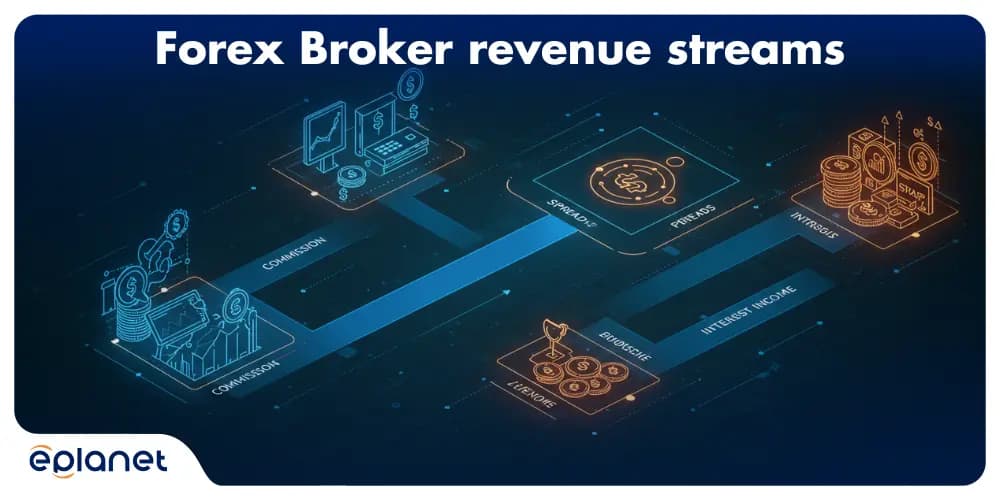
Here's something most traders don't fully grasp: forex brokers make money in several ways, and understanding these mechanisms can significantly impact your trading costs.
Spreads: The most obvious revenue source. That difference between the bid and ask price? Your broker keeps a portion of it. It's like a toll booth – every time you enter or exit a position, you pay.
Commissions: Some brokers charge explicit commissions instead of marking up spreads. This model often results in lower total costs for active traders.
Overnight Financing: When you hold positions overnight, brokers charge or pay interest based on the differential between the two currencies in your pair. They typically keep a portion of this as profit.
Marking to Market: This is where it gets controversial. Some brokers (particularly market makers) may profit from client losses, creating a potential conflict of interest.
Do Brokers Actually Profit from Your Losses?
Everyone points to the conflict-of-interest that allegedly affects every transaction executed by a broker. Market makers are paid to trade against their clients. Therefore they profit from your losses. It is often written that this is a situation that must be avoided at all costs. But does it really exist?
That is true in the narrowest technical sense. It stops being true the moment you think about what a broker actually needs to survive.
A trader who loses it all and disappears from the market doesn’t generate any money for the broker from that has been taken from his account. no spreads, no commissions, no interest on overnight positions. A trader who is successful, grows his account, trades large positions and remains active for three years generates money for the broker with every single transaction he enters. So, the broker has a direct interest in keeping such a trader active on the platform.
But it becomes very obvious when you are on the brokerage side of the trading industry. A broker needs clients. They need them to deposit, to trade, to refer other clients. A broker who is constantly loosing clients (wiping out their accounts) is no business. A broker who has clients that trade in large volumes, deposit large sums of money and stay active on the trading platform for years is good business. It’s the same number. The number of traders a broker has who are actively trading (trading in large volumes) and are depositing and withdrawing money is the same number when looked at from the brokerage side of the industry as the number of traders that a broker has who are loosing money in their accounts.
Just because a brokerage does not operate with integrity does not mean that the broker wants you to lose. There are many aspects of a brokerage that a trader must be aware of before making a decision to open an account. Some of the more important ones are the broker’s regulation, the quality of their execution, how they manage the spread during major news events, and how smooth the withdrawal process is. Starting with the assumption that your broker wants you to lose is the wrong filter. Use the following criteria instead: regulation, execution quality, and withdrawal process.
Types of Forex Brokers: Decoding the Alphabet Soup
The forex world loves its acronyms, and broker types are no exception. Let me demystify the main categories so you can navigate this landscape like a pro.
Market Makers (Dealing Desk)
Think of market makers as the house in a casino. They create their own bid and ask prices, often taking the opposite side of your trades. When you buy EUR/USD, they're selling it to you – and potentially profiting if you lose.
Pros:
- Fixed spreads provide cost predictability
- Instant execution on most trades
- Often offer micro-lots for beginners
- Better prices during news events
Cons:
- Potential conflicts of interest
- May restrict certain trading strategies
- Prices might deviate from interbank rates
- Re-quotes during volatile periods
STP (Straight Through Processing)
STP brokers act more like order routers. They don't take the opposite side of your trades; instead, they pass your orders directly to liquidity providers – banks, hedge funds, and other financial institutions.
Pros:
- No dealing desk conflicts
- Access to interbank pricing
- Transparent execution
- Support for all trading strategies
Cons:
- Variable spreads can widen dramatically
- Possible slippage during news
- Higher minimum deposits
- Less beginner-friendly features
ECN (Electronic Communication Network)
ECN brokers provide the most transparent trading environment. They operate electronic networks where your orders interact directly with orders from other traders, banks, and institutions.
Pros:
- True interbank spreads
- Complete transparency
- Fastest execution speeds
- Support for scalping and expert advisors
Cons:
- Commission-based pricing
- Higher capital requirements
- Variable spreads
- More complex for beginners
Hybrid Models
Many modern brokers combine elements from different models, offering STP execution for larger accounts while providing market-making services for smaller traders. This hybrid approach allows them to cater to different client segments while managing their risk exposure.
| Broker Type | Spreads | Execution | Best For | Typical Minimum |
|---|---|---|---|---|
| Market Maker | Fixed | Instant | Beginners | $100-$500 |
| STP | Variable | Fast | Intermediate | $500-$1,000 |
| ECN | Raw + Commission | Fastest | Advanced | $1,000+ |
Read More: Types of Forex Brokers: A Practical Guide to Choosing the Right Broker
Forex Broker vs Stock Broker: The Ultimate Showdown
You might wonder why you can't just use your stock broker for forex trading. While some traditional brokers offer forex services, the differences run deeper than you might expect.
Market Hours and Accessibility
Forex brokers operate in a 24/5 market that never sleeps (except weekends). You can trade EUR/USD at 3 AM just as easily as 3 PM. Stock brokers, conversely, are tied to exchange hours – try placing a NYSE order at midnight, and you'll wait until the next morning.
Leverage and Margin
Here's where things get spicy. US forex brokers can offer up to 50:1 leverage on major pairs, while stock brokers typically max out at 2:1 for day trading. This difference can dramatically impact both your potential profits and risks.
Product Focus and Expertise
Stock brokers excel at equity research, fundamental analysis, and long-term investment strategies. Forex brokers specialize in currency analysis, technical indicators optimized for FX, and short-term trading tools.
Cost Structures
The cost comparison isn't straightforward. Stock brokers typically charge per-share or per-trade commissions, while forex brokers profit from spreads. For active traders, forex can be cheaper, but for buy-and-hold investors, stocks often win.
Read More: Forex or the Stock Market
How to Choose a Forex Broker: The Art of Selection
Choosing a forex broker is like picking a life partner – you'll spend a lot of time together, they'll handle your money, and the wrong choice can be expensive. Here's my battle-tested framework for making this crucial decision.
The Non-Negotiable Foundation: Regulation
I cannot stress this enough – regulation isn't just important, it's everything. In the US, look for brokers regulated by the Commodity Futures Trading Commission (CFTC) and registered with the National Futures Association (NFA).
Why does this matter? Regulated brokers must segregate client funds, maintain minimum capital requirements, and submit to regular audits. If they go bankrupt, your money is protected. Unregulated brokers? Your funds could disappear faster than your college beer money.
Red Flags to Avoid:
- Brokers offering leverage higher than 50:1 to US clients
- Promises of guaranteed profits or "risk-free" trading
- Offshore entities claiming US regulation
- Reluctance to provide regulatory information
Platform Performance: Your Trading Command Center
Your trading platform is your cockpit in the forex fighter jet. It needs to be reliable, fast, and intuitive. Here's what separates the premium experiences from the budget disasters:
Execution Speed: In forex, milliseconds matter. A platform that takes three seconds to execute your order during NFP (Non-Farm Payrolls) is three seconds too slow.
Uptime Reliability: Your broker's platform should have 99.9%+ uptime. Server crashes during volatile markets aren't just inconvenient – they're account killers.
Mobile Integration: Whether you're using MetaTrader 4, proprietary platforms, or web-based solutions, seamless mobile functionality isn't optional in 2025.
Advanced Features: Look for features like one-click trading, advanced charting tools, economic calendars, and automated trading capabilities.
Cost Analysis: Beyond the Headline Numbers
Don't fall for the "lowest spreads" marketing trap. Smart traders focus on total trading costs, which include several components:
Spread Analysis: Compare spreads during different market conditions – London session, New York overlap, and Sunday night reopening. Many brokers offer tight spreads during quiet periods but widen dramatically when volatility spikes.
Commission Structures: Some brokers charge commissions instead of marked-up spreads. For active traders, this often results in lower total costs despite the additional fee.
Financing Costs: If you hold positions overnight, swap rates can significantly impact profitability, especially for carry trades or long-term strategies.
Hidden Fees: Watch for withdrawal fees, inactivity charges, and currency conversion costs that can erode profits over time.
Customer Service: Your Lifeline
When your platform crashes during a major news event, customer service quality separates professional brokers from amateur hour operations. Test their response times, knowledge levels, and problem-solving abilities before committing significant capital.
What to Test:
- Response time during different hours
- Knowledge of platform features
- Ability to handle account issues
- Multiple contact methods (phone, chat, email)

How to Verify a Forex Broker's Regulation: Detective Work
Verifying regulation isn't just due diligence – it's financial self-defense. Here's my step-by-step process for separating legitimate brokers from sophisticated scammers.
The Primary Verification Process
Step 1: Check the NFA Registry Visit the NFA's BASIC search tool and enter the broker's name or NFA ID number. Legitimate US forex brokers must be registered here. No registration? Run away immediately.
Step 2: Verify CFTC Registration Cross-reference with the CFTC's registration database. Legitimate brokers will appear in both systems with consistent information.
Step 3: Review Regulatory History Look for any disciplinary actions, fines, or regulatory violations. While minor infractions might be acceptable, patterns of violations signal serious red flags.
Step 4: Contact the Regulator When in doubt, contact the NFA directly. They can confirm a broker's regulatory status and any pending investigations.
International Regulation Recognition
For brokers with international operations, these regulatory bodies carry significant weight:
Financial Conduct Authority (FCA) – UK: Known for strict standards and robust client protection measures.
Australian Securities and Investments Commission (ASIC) – Australia: Requires segregated client funds and provides compensation schemes.
Cyprus Securities and Exchange Commission (CySEC) – Cyprus: EU regulation with MiFID II compliance and investor compensation.
Additional Verification Resources
WikiFX Platform: For comprehensive broker verification, consider using WikiFX, an independent platform that aggregates regulatory information, user reviews, and risk scores for forex brokers worldwide. Their database includes regulatory status verification, complaint tracking, and community-driven reviews that can provide valuable insights into broker reliability and performance.
Warning Signs of Fake Regulation
Sophisticated scammers create fake regulatory documentation. Here's how to spot the fakes:
- Regulatory numbers that don't exist in official databases
- Claims of regulation by non-existent authorities
- Offshore registration presented as major jurisdiction regulation
- Reluctance to provide regulatory documentation
Do You Need a Broker to Trade Forex?
This question comes up constantly, and the answer reveals a fundamental misunderstanding of how modern forex markets work. Let me clear up the confusion.
The Reality of Forex Market Access
Technically, you could trade forex without a traditional broker – but only if you have millions in capital and relationships with major banks. The interbank forex market requires massive credit lines and institutional status that individual traders simply cannot access.
Alternative Access Methods
Bank Currency Exchange: You can exchange currencies at banks, but this isn't trading – it's conversion. Spreads are enormous, there's no leverage, and you can't profit from falling currency values.
Currency ETFs: Exchange-traded funds tracking currency movements provide exposure to forex markets through stock brokers. However, these instruments lack the flexibility, leverage, and precision of direct forex trading.
Peer-to-Peer Platforms: Some platforms claim to offer direct currency trading between individuals. While innovative, these services often lack regulation, liquidity, and the sophisticated tools serious traders require.
Why Brokers Remain Essential
Modern forex brokers don't just provide market access – they offer:
- Leverage: Access to position sizes far exceeding account balances
- Liquidity: Instant execution at competitive prices
- Technology: Advanced platforms with analysis tools
- Risk Management: Stop losses, take profits, and position sizing tools
- Regulatory Protection: Segregated funds and dispute resolution
Can You Trade Forex Without a Broker?
While we've established that brokers are practically necessary for serious forex trading, let's explore the theoretical alternatives and why they fall short.
Direct Bank Relationships
Major corporations and institutions sometimes trade currencies directly with banks. This requires:
- Credit facilities worth millions
- Established banking relationships
- Legal documentation and compliance infrastructure
- Risk management departments
Unless you're running a multinational corporation, this path isn't viable.
Cryptocurrency Exchanges
Some crypto exchanges offer currency pairs that mirror traditional forex markets. However, these platforms operate differently:
Pros:
- Potentially higher leverage
- 24/7 trading including weekends
- No traditional regulatory constraints
Cons:
- Extreme volatility
- Limited liquidity on some pairs
- Regulatory uncertainty
- Counterparty risk
The Bottom Line
For practical purposes, retail traders need forex brokers. The question isn't whether to use one, but which one offers the best combination of regulation, costs, and service quality.
Best Forex Broker for Beginners: Starting Right
If you're new to forex trading, choosing your first broker sets the foundation for your entire trading journey. Make the wrong choice, and you might develop bad habits or lose money to preventable mistakes.
Essential Features for New Traders
Educational Resources: The best beginner brokers offer comprehensive education – not just basic articles, but webinars, video tutorials, and interactive courses. Look for brokers that explain concepts like pip values, lot sizes, and risk management in plain English.
Demo Accounts: Never trade real money until you've spent significant time on demo accounts. The best brokers offer unlimited demo access with real market conditions and full platform functionality.
Micro Lots: Starting with standard lots ($100,000 position sizes) is like learning to drive in a Formula 1 car. Look for brokers offering micro lots (1,000 units) or even nano lots (100 units).
User-Friendly Platforms: Complex platforms with hundreds of indicators can overwhelm beginners. Seek brokers offering simplified interfaces with essential tools clearly organized.
Top Beginner-Friendly Features
Risk Management Tools: Built-in calculators for position sizing, pip values, and risk-reward ratios help prevent costly mistakes.
Customer Support: New traders have questions – lots of them. Choose brokers with responsive, knowledgeable support teams available during your trading hours.
Negative Balance Protection: This feature prevents your account from going into negative territory during extreme market movements.
Economic Calendar Integration: Understanding how news affects currencies is crucial. Integrated calendars with volatility indicators help beginners anticipate market movements.
Common Beginner Mistakes to Avoid
Choosing Based on Bonus Offers: Flashy deposit bonuses often come with restrictive terms that can trap your funds.
Ignoring Regulation: The excitement of starting can lead to overlooking regulatory verification – a potentially expensive mistake.
Focusing Only on Spreads: While important, spreads are just one component of trading costs. Consider the complete picture.
Overlooking Education: Jumping straight into trading without proper education is like performing surgery after watching YouTube videos.
Best Forex Broker for Copy Trading: Following the Pros
Copy trading represents one of the most interesting developments in retail forex. Instead of developing your own strategies, you can automatically replicate the trades of successful traders. But not all brokers handle copy trading equally.
What Makes a Great Copy Trading Platform
Signal Provider Selection: The best platforms offer detailed statistics on signal providers – win rates, drawdown history, risk scores, and trading styles. You need enough information to make informed decisions about who to follow.
Proportional Position Sizing: Quality platforms automatically scale copied trades to your account size. If a signal provider trades $10,000 lots and you have a $1,000 account, the system should proportionally reduce position sizes.
Risk Management Controls: Look for platforms allowing you to set maximum drawdown limits, stop-loss levels, and position size restrictions for copied trades.
Performance Transparency: Reputable platforms provide verified track records, real-time performance data, and clear fee structures for signal providers.
Copy Trading Platform Leaders
ZuluTrade Integration: Many brokers partner with ZuluTrade to offer comprehensive copy trading services. This platform provides extensive trader statistics and risk management tools.
ePlanet Brokers: A specialized platform that's gaining traction in the copy trading space, ePlanet Brokers offers innovative signal provider matching algorithms and advanced portfolio diversification tools. Their platform stands out with real-time performance analytics and customizable risk parameters for each copied trader.
Proprietary Systems: Some brokers develop their own copy trading networks, offering tighter integration with their platforms and potentially better execution.
Social Trading Features: Advanced platforms include social features like trader discussions, strategy explanations, and community rankings.
Copy Trading Considerations
Fee Structures: Copy trading often involves additional fees – performance fees to signal providers, platform fees, and sometimes higher spreads.
Risk Management: Following multiple traders can lead to over-leveraging if their strategies correlate during market stress.
Due Diligence: Past performance doesn't guarantee future results. Successful traders can experience losing streaks that coincide with your copying period.
Best Forex Broker for USA Traders: Navigating Regulations
US forex trading operates under some of the world's strictest regulations. While this provides excellent consumer protection, it also limits options and features compared to international markets.
Understanding US Forex Regulations
Dodd-Frank Impact: Post-2008 financial crisis regulations significantly changed the US forex landscape. Many international brokers stopped accepting US clients rather than comply with new requirements.
Leverage Limitations: US brokers cannot offer more than 50:1 leverage on major pairs and 20:1 on minor pairs. This differs dramatically from the 500:1+ leverage available internationally.
FIFO Rules: First In, First Out rules require US brokers to close positions in the order they were opened. This prevents certain hedging strategies popular internationally.
No Hedging Restrictions: US regulations prohibit taking simultaneous long and short positions in the same currency pair through the same broker.
Top US-Regulated Brokers
Established Players: Several well-established brokers maintain US operations despite regulatory complexity. Leading options include Forex.com and IG, both offering comprehensive services specifically tailored for US traders. These firms typically provide:
- Multiple platform options
- Comprehensive research and education
- Professional-grade tools
- Competitive pricing within regulatory constraints
Specialized US Firms: Some brokers focus exclusively on the US market, offering features specifically designed for American traders:
- Tax reporting assistance
- Integration with US banking systems
- Customer service during US business hours
- Compliance with US advertising regulations
Working Within US Constraints
Maximizing Available Leverage: While 50:1 might seem limiting compared to international options, it's still substantial leverage that requires careful risk management.
Alternative Strategies: US regulations encourage different trading approaches – swing trading over scalping, fundamental analysis over pure technical analysis.
Tax Considerations: US tax treatment of forex profits differs from stocks. Section 988 treatment often results in higher tax rates, making account choice important for tax optimization.
US Forex Regulations
How to Open a Forex Trading Account: Your Step-by-Step Journey
Opening a forex account has become remarkably streamlined, but understanding the process helps you avoid delays and potential issues.
Pre-Application Preparation
Documentation Gathering: Assemble required documents before starting the application process:
- Government-issued photo ID (driver's license or passport)
- Proof of residence (utility bill or bank statement within 90 days)
- Social Security number or tax identification
- Employment and income information
- Bank account details for funding
Financial Preparation: Determine your initial deposit amount and funding method. Most brokers accept:
- Bank wire transfers
- ACH transfers
- Debit/credit cards
- Electronic wallets (where permitted)
The Application Process
Online Application: Most brokers offer streamlined online applications taking 10-15 minutes to complete. You'll provide:
- Personal information (name, address, date of birth)
- Financial information (income, net worth, investment experience)
- Trading objectives and risk tolerance
- Employment details
Regulatory Questionnaire: US brokers must assess your suitability for forex trading. Questions cover:
- Previous trading experience
- Understanding of forex risks
- Financial situation and objectives
- Risk tolerance assessment
Document Verification: Upload or email required documentation. Most brokers use automated systems for quick verification, but manual review may be required for complex situations.
Account Activation Timeline
Standard Processing: Most applications are approved within 1-3 business days, assuming complete documentation and automated verification success.
Potential Delays: Several factors can slow approval:
- Incomplete documentation
- Address verification issues
- Employment verification requirements
- Manual review triggers
Expedited Processing: Some brokers offer expedited processing for larger initial deposits or existing clients of affiliated companies.
Funding Your Account
Initial Deposit Requirements: Minimum deposits vary significantly:
- Micro account brokers: $10-$100
- Standard brokers: $250-$1,000
- Premium services: $10,000+
Funding Timeline: Different methods have varying processing times:
- ACH transfers: 1-3 business days
- Bank wires: Same day to 1 business day
- Card deposits: Instant to 1 business day
- Electronic wallets: Instant to several hours
Post-Opening Checklist
Platform Download: Download and install trading platforms, ensuring they work properly on your devices.
Demo Testing: Even after opening a live account, spend time on demo platforms to familiarize yourself with broker-specific features.
Risk Management Setup: Configure account settings including:
- Maximum leverage preferences
- Default stop-loss settings
- Email and SMS alerts
- Account security features
Education Resources: Access broker educational materials and schedule any available training sessions.
Example Registration Process: ePlanet Brokers
To illustrate the typical account opening process, let's walk through registering with ePlanet Brokers:
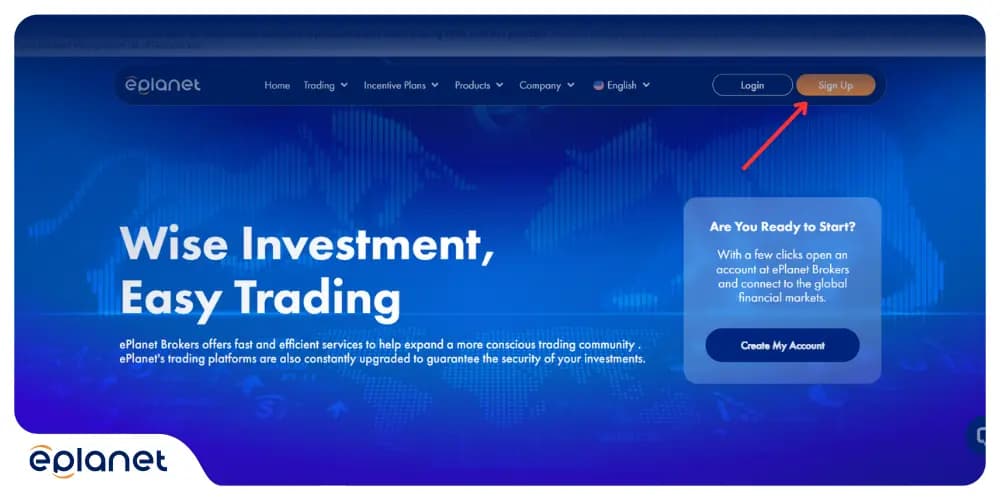
Step 1: Initial Registration Visit ePlanet Brokers and click the "Sign Up" button. This begins the registration process.
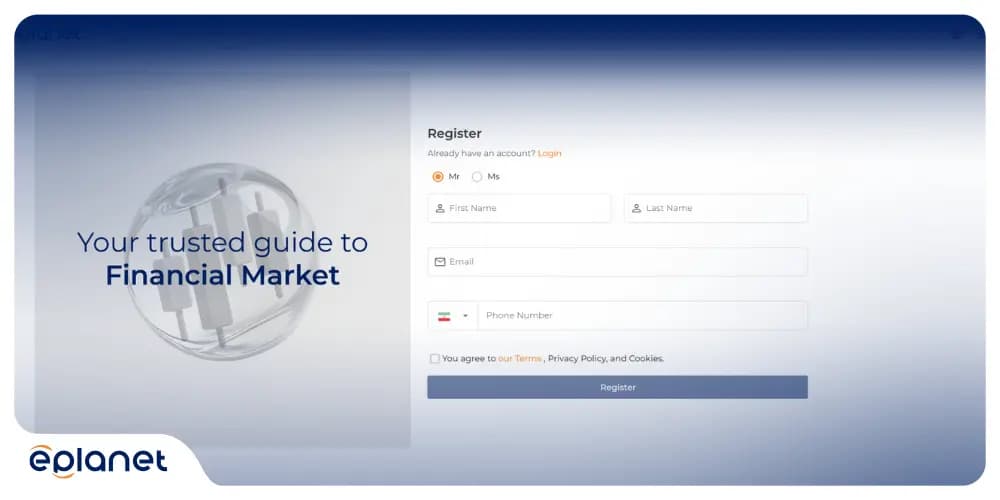
Step 2: Complete Application Form Fill out the required registration form with your personal information, contact details, and basic financial information.
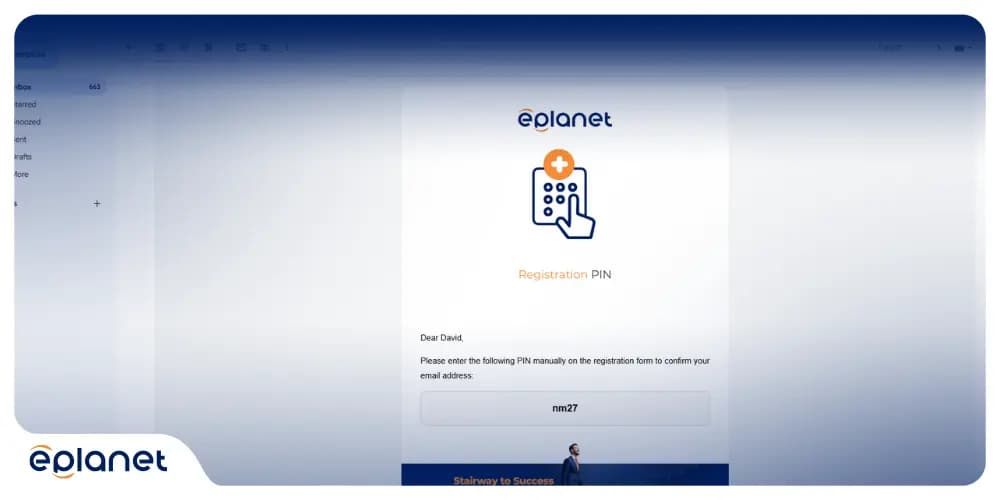
Step 3: Email Verification Check your registered email address and click the confirmation link to verify your email account.
Step 4: KYC (Know Your Customer) Process Complete the identity verification process by uploading required documents such as government-issued ID and proof of address.
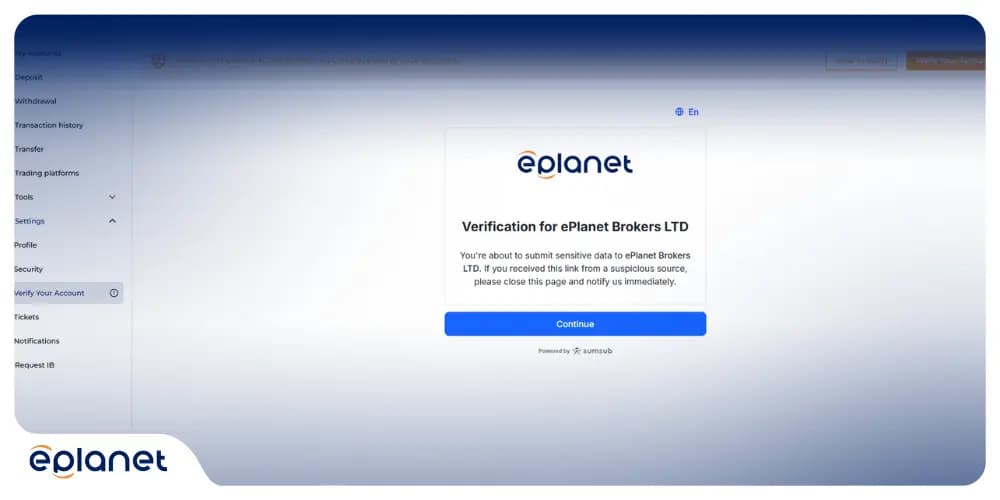
Step 5: Account Creation Once KYC verification is complete, you can create your trading account and begin funding it to start trading.
This streamlined process typically takes 1-3 business days from start to finish, depending on document verification speed.
Advanced Broker Selection Strategies
Beyond the basics, experienced traders consider sophisticated factors when evaluating brokers.
Execution Quality Analysis
Slippage Statistics: Request or research historical slippage data, particularly during high-impact news events. Quality brokers provide transparent execution statistics.
Order Fill Rates: What percentage of orders are filled at requested prices versus partial fills or requotes? This data reveals execution quality under various market conditions.
Latency Testing: For algorithmic traders, server location and connectivity speed can significantly impact profitability.
Liquidity Provider Relationships
Tier 1 Banks: Brokers with direct relationships to major banks typically offer better pricing and execution during volatile periods.
Multiple Liquidity Sources: Brokers accessing multiple liquidity providers can offer better prices and reduce execution risks.
Transparency Reports: Some brokers publish regular execution quality reports showing their liquidity sources and execution statistics.
Technology Infrastructure
Server Locations: Multiple server locations provide redundancy and reduced latency for traders in different geographical areas.
API Quality: For algorithmic trading, robust APIs with comprehensive documentation and reliable connectivity are essential.
Platform Stability: Historical uptime data and stress testing results indicate platform reliability during market volatility.
Insert comparison table of advanced broker features here
Frequently Asked Questions
What is a forex broker?
A forex broker is a company that gives retail traders access to the foreign exchange market. The interbank market where banks trade currencies requires direct credit relationships and institutional capital that individual traders do not have. A broker connects you to that network and handles execution, margin, and platform access in exchange for spreads, commissions, or both.
How does a forex broker work?
When you place a trade, the broker either matches it against another client's opposite order, passes it to a liquidity provider, or takes the other side themselves, depending on their execution model. Revenue comes from the spread between buy and sell prices, commissions on ECN accounts, and overnight financing on positions held past the daily rollover. Which model your broker runs matters because the same 0.3 pip spread fills very differently under a market maker versus an ECN, particularly during fast-moving sessions.
What are the main types of forex brokers?
Three types. Market makers set their own prices and take the other side of your trades, which produces fixed spreads but means their book moves against yours when you win. STP brokers pass orders directly to liquidity providers with no dealing desk, so spreads vary with market conditions. ECN brokers connect you to a network of banks and charge a flat commission per lot rather than marking up the spread. For active gold traders, ECN at 0.0 pips plus commission is usually cheaper over time than a fixed spread model.
How do forex brokers differ from stock brokers?
Forex brokers operate in a 24/5 market with no central exchange. Leverage with international brokers can reach 500:1 on major pairs, compared to 2:1 on standard equity margin accounts. Cost structures differ too: forex brokers earn from spreads and per-trade commissions, while stock brokers charge per-order fees. If gold, currencies, or indices are your main instruments, a dedicated forex broker gives you tighter spreads and more relevant execution conditions than a general brokerage will.
How do I choose the right forex broker?
Start with regulation. FSCA, FCA, ASIC, and CySEC-regulated brokers must hold client funds in segregated accounts, which means your capital is protected if the broker becomes insolvent. Confirm the registration number directly on the regulator's website, then test the broker with real money before committing serious capital: deposit a small amount, trade it, and withdraw. If the funds arrive without unexplained holds, that single test is worth more than reading reviews for a month.
How can I verify a forex broker's regulation?
Each major regulator maintains a public search database where you can verify any broker's registration status directly. For FSCA-regulated brokers, search the FSP number on the FSCA website. eplanet Brokers holds FSP number 52199, verifiable there directly. For UK brokers, use the FCA register at fca.org.uk. For Australian brokers, use ASIC Connect. For CySEC, use the CySEC public register. Always confirm on the regulator's site rather than taking the broker's word for it.
Do I need a broker to trade forex?
Yes. The interbank forex market requires institutional credit facilities and capital in the millions. Individual traders have no direct access. A regulated broker is the only practical route to live currency markets, leverage, and the execution infrastructure that a real trading strategy requires.
Can I trade forex without a broker?
Bank currency exchange and currency ETFs exist, but neither works for active trading. Bank rates are built for conversion and carry spreads that make short-term speculation unprofitable. ETFs track exchange rates but cannot be leveraged the same way and are tied to stock exchange hours. For anyone running a strategy on forex pairs, gold, or indices, there is no real alternative to a regulated broker with direct market access.
What's the best forex broker for beginners?
The most important feature is a demo account that replicates live conditions, not one where you can reset the balance whenever a trade goes wrong. Look for a broker where the demo starts at a fixed amount matching your intended deposit and holds you to realistic spreads. Low minimum deposits help too: eplanet Brokers allows live accounts from $30, which means you can trade real money with actual stakes before risking anything significant.
Which forex broker is best for copy trading?
Win rate alone is not enough information. A provider with a 75% win rate but a poor risk-to-reward ratio loses money over time. Look for platforms that show average risk-to-reward ratios, maximum drawdown history, and position sizing relative to the provider's account. High follower counts on a single provider can also cause entry slippage on fast-moving instruments, which erodes the performance you thought you were copying.
How do I open a forex trading account?
Most brokers complete the process in three steps: an online application with personal and financial details, identity verification through a government-issued ID and proof of address, and an initial deposit. KYC typically takes a few hours to two business days. At eplanet Brokers, the minimum deposit is $30 for the Zero account, and the account becomes active on MT5 and cTrader once the deposit clears.
Conclusion
When most traders underinvest the attention that they do pay to their trading (or other) work to Broker selection; they spend months developing a good strategy to have executed and then invest only a few hours selecting a good Broker to execute their trades with.
The framework to verify the Broker is very simple: check the official registry to verify if the Broker is regulated, make a minimum deposit to open and test the trading platform, verify the withdrawal to confirm that it is done without problem and verify the spreads during high impact news to verify how they behave, not only during normal market hours.
To set the record straight, Brokers make no money from their clients’ losses. A trader who goes and blows their account and disappears months or years later is worthless to a Broker in the long run. What a Broker wants is a client that is trading profitably, and as their account grows, the client continues to deposit more and be an active trader for long periods of time. That is where the real revenue is for a Broker, and for good reason. their incentives are aligned with that of a successful trader. The conflict of interest rant that so many Traders make towards Brokers is completely off the mark.
Trade through what you can verify not what you read.