
Technical Indicators in Forex Trading: How to Use and Combine Moving Averages, RSI, MACD, and Bollinger Bands
Technical indicators are mathematical formulas that process historical price data to help traders identify trends, time entries, and measure momentum, but they confirm what has already happened, not what will happen next.

Introduction
Technical indicators are the most widely used tools in technical analysis. they are mathematical formulas applied to historical price data. They help traders identify trend direction, measure momentum, and find better timing for entries and exits. What they do not do is predict the future. Every indicator on your chart is looking backward, not forward.
The four indicators covered in this article, moving averages, RSI, MACD, and Bollinger Bands, are the most widely used in forex trading for a reason. They are not popular because they are perfect. They are popular because each one measures something genuinely useful, they are available on every platform, and traders have had decades to understand where they work and where they break down.
If you already know the basics, this article will show you how to combine them properly, where most traders misuse them, and why the indicator itself is rarely the problem when a trade goes wrong.
What Can You Trade in Forex
Many new traders often ask, “ What can you trade in forex? ” In the forex market, the answer is diverse. Beyond the traditional major and minor currency pairs, many brokers offer exotic pairs as well as additional instruments like commodities, indices, and even cryptocurrencies. Understanding what can you trade in forex not only broadens your market opportunities but also helps in choosing the most effective technical indicators and trading strategies.
Reliable indicators in technical analysis
Before introducing the important indicators, it must first point out that sometimes the term oscillator is used in this category, which refers to the indicators that are displayed at the bottom or top of the price chart and their value oscillates between 0 to 100. In the following, the most important indicators are discussed and the characteristics of each are stated.
Moving Average
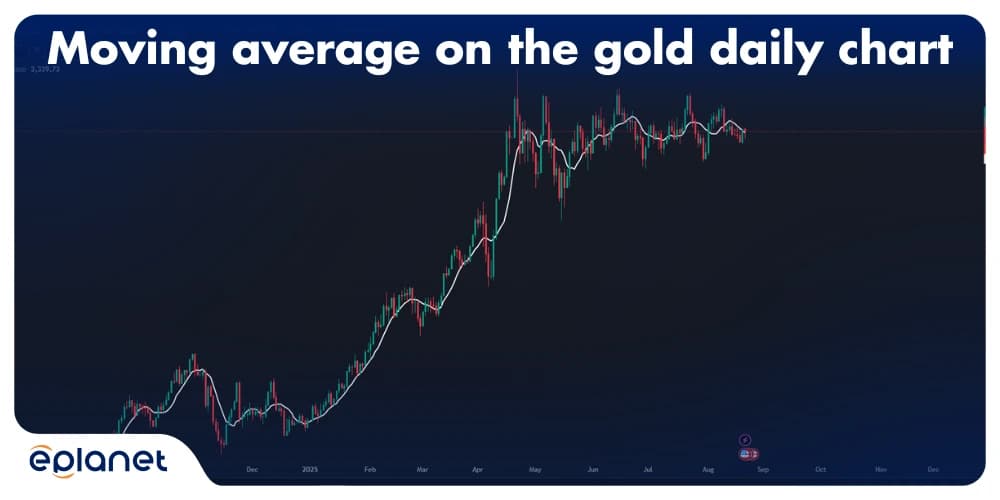
Moving averages are among the most popular indicators in forex. Many traders believe price cannot stay too far from its average for long and will eventually return. A moving average is simply the average price over a set number of past periods—for example, the 14-period average reflects the last 14 minutes, hours, or days, depending on the chart’s timeframe. They can be calculated in different forms such as simple, exponential, or weighted.
For traders using 5 minute charts, incorporating an effective exponential moving average (EMA) can sharpen your short-term analysis. Many experts favor the 8-period EMA as the best EMA for 5 minute charts because it quickly reacts to price changes while filtering out excessive noise. This responsiveness makes it ideal for scalping and short-term trading strategies. For added confirmation, traders often combine the 8 EMA with a slightly longer moving average, like the 21 EMA, to balance sensitivity with trend stability.
Moving averages have many uses in technical analysis. Sometimes they are used as dynamic levels of support and resistance, and sometimes their combination in different periods and their cross with each other are used as a signal to enter the trade. But it is important to know that moving averages are delayed indicators, so the signals are accompanied by a delay. Therefore, it is possible that they may cause loss of profit or even cause losses and using it only as a signal to enter the transaction is not recommended.
RSI
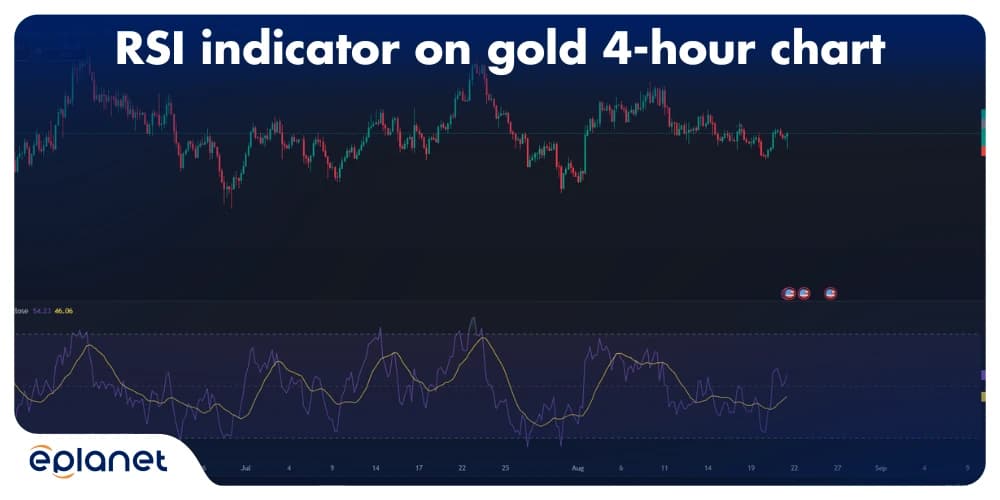
Another important and famous oscillator used in technical analysis is the RSI. It is safe to say that there is no trader in the forex market who has not used this indicator at least once or is not aware of its use in technical analysis.
This oscillator can be calculated and used for different periods of time. Simple and exponential type for short periods of time are not much different. But if it is used in long-term daily, weekly and monthly periods, it should be noted that in the exponential type, recent price data gets more weight, so it is more sensitive to the latest price changes and has more fluctuations.
Many traders use this oscillator to identify oversold areas. Of course, it has another more important use, which is known as divergence. That is, where the lows and highs in this indicator do not match with the price. For example, while the price is hitting higher highs and higher lows, the RSI makes lower highs and lows, which traders call this “divergence” and consider it a sign of a possible reversal.
Unlike moving averages, RSI is considered a type of leading indicator, that is, it somehow predicts the probability of a change in price movements and in this sense, many traders interested in. Of course, it should be noted that this feature, as well as it can make a good profit, may also cause losses due to a mistake in the analysis.
MACD
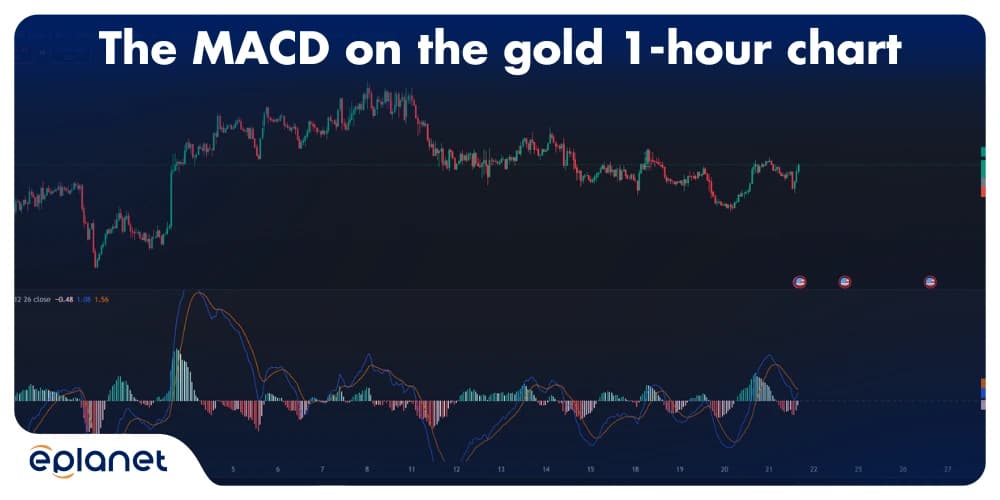
MACD which stands for Moving Average Convergence Divergence, is one of the most popular indicators in technical analysis. This indicator consists of three elements: MACD line, signal line and histogram, which is calculated based on the difference of two moving averages and in a way expresses the price trend and its strength.
Traders use this oscillator in many ways from trend detection to trading signals. For example, the intersection of two MACD and signal lines is used as an entry signal. In addition, the combination of MACD with some other types of tools such as RVI and MFI is also used to identify the appropriate place to enter the trade.
Read More: Smart Money Concept (SMC) Forex Strategy Explained
Bollinger Bands
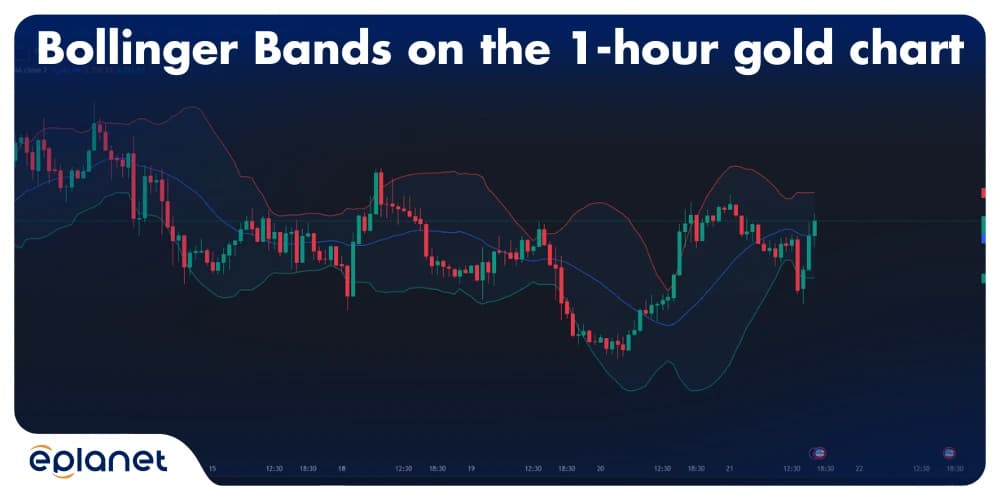
Bollinger Bands stand out among technical indicators because they automatically adapt to changing market conditions. Created by John Bollinger in the 1980s, these three lines consist of a middle moving average flanked by upper and lower bands set two standard deviations away. Unlike static indicators with fixed levels, Bollinger Bands expand during volatile periods and contract during quiet times, making their signals contextually relevant across all markets and timeframes.
The real power lies in their versatility and high-probability setups. The famous "squeeze" occurs when bands contract to narrow levels, often preceding explosive price movements. During trending markets, prices "walk" along one band, confirming trend strength. In ranging conditions, the bands act as dynamic support and resistance levels. Professional traders achieve 70%+ win rates using advanced Bollinger Band strategies and multi-timeframe analysis.
What sets Bollinger Bands apart is their ability to provide trend and volatility information simultaneously while requiring minimal customization. The standard settings work effectively across most markets, though advanced traders employ dual systems or combine them with RSI and MACD. Whether you're day trading or swing trading, Bollinger Bands offer clear visual cues for entries, exits, and risk management in any market condition.
Comparing the Most Popular Technical Indicators
Before going through each indicator in detail, it helps to see how they compare side by side. The table below covers the four most widely used indicators, what type they are, what they are best for, how they perform on gold (XAU/USD), and which timeframes suit them best.
| Indicator | Type | Best Used For | Gold (XAU/USD) Suitability | Best Timeframes |
|---|---|---|---|---|
| Moving Average (MA) | Lagging | Trend direction, dynamic support/resistance | Good. Useful for identifying trend bias and key moving levels on gold | 1H, 4H, Daily |
| RSI | Leading | Spotting overbought/oversold conditions, divergence | Very good. Gold responds clearly to exhaustion at key RSI levels | 15M, 1H, 4H |
| MACD | Lagging | Trend momentum, entry confirmation | Good. Works well for confirming trend continuation trades on gold | 1H, 4H, Daily |
| Bollinger Bands | Lagging (with leading elements) | Volatility measurement, range trading, breakout setups | Excellent. Gold's strong reactions to volatility make the squeeze setup particularly reliable | 15M, 1H, 4H |
A few things worth noting from this table.
RSI is the only true leading indicator in this group. That makes it useful for catching potential reversals early, but it also means it produces more false signals than the others. Moving averages and MACD follow price, so their signals come later but with more confirmation behind them. Bollinger Bands sit somewhere in the middle: they react to current volatility conditions, which gives them a partial predictive quality without fully qualifying as leading indicators.
For gold specifically, all four indicators have practical value, but they reward different trading styles. Traders looking for early reversal signals at key levels tend to rely more on RSI. Traders who want confirmation before entering a trend trade lean toward MACD or moving averages. Bollinger Bands are useful for both, particularly when the market has been quiet and a squeeze signals that a larger move is approaching.
None of these indicators work in isolation. The table is a starting point, not a trading system. The sections below explain how each one works and where it tends to succeed or fail.
Using to in/out positions
As mentioned before, one of the important uses of the technical indicators is to identify the right price for taking or exiting positions. MACD, RSI, moving averages, stochastic, etc. are among the important tools used in this field.
For example, in the MACD indicator, whenever the signal line crosses the MACD line, it is considered as a signal to enter the transaction and according to the direction of the MACD line crossing, the trader take position. To exit the trade, the intersection of these two lines in the opposite direction can be a warning to change the trend and thus signal exit from the transaction.
In RSI, the most important entry signal is the occurrence of divergence in the saturated zone. In other words, when the RSI enters the saturated buy or sell range and a divergence in the price occurs at the same time, these signs can be considered as a signal to enter the position.
Cross between moving averages with different time periods can also be used as a signal to enter a trade. For example, some traders consider the intersection of two 21-period and 50-period moving averages with each other as a signal to enter the position and proceed to enter. Of course, it should be noted that using these types of indicators as signals, despite their simplicity, which is one of their advantages, may cause a decrease in profit or even suffer loss due to the delay.
Important points in setting and using indicators in trading
In setting the parameters and using technical analysis tools, the trader should pay attention to several points as follows:
- Whether the indicator is leading or lagging.
- The formula and how to calculate the indicator.
- The effective parameters in calculating the indicator and to know what changes occur in the issued signals by changing them.
- Indicator results in different timeframes is usually different. Therefore, the trader should identify the most suitable timeframe for using the indicator.
Advantages and disadvantages of using indicators in trading decisions
One of the most important advantages of these types of tools is their ease of use. But at the same time, it should be noted that these tools are only calculation formulas based on historical price data, so they may show completely opposite results in predicting price movements.
Experienced traders usually use combination methods in their trades to cover the weak points of the indicators. For example, they use the combination of several indicators along with a technical analysis style, such as price action or support and resistance levels.
How to Combine Indicators Without Conflicting Signals
Most trading content tells you to combine indicators. The advice stops there. What it rarely explains is how to do it without building a system where five conditions need to agree before you can enter, by which point the move is already half over.
The way to approach this is to make sure each indicator in your setup answers a different question. When two indicators measure the same thing, the second one does not add confirmation. It adds noise.
There are three questions worth answering before entering a trade:
What direction is the market moving? Is there enough momentum behind that direction to act on? Is price at a level where a reaction is structurally likely?
A moving average handles the first question. It identifies the prevailing direction and keeps you from trading against a trend without realising it. RSI handles the second. It tells you whether momentum is building or exhausting, which matters for timing. Price structure, key horizontal levels, weekly highs and lows read directly from the chart, handles the third. No indicator is needed for that part. You read it from the chart itself.
Three inputs, each answering a separate question. That is the structure.
On XAU/USD, it looks like this in practice.
Place a 50-period moving average on the chart. If price is trading above it, the bias is bullish and you focus on buy setups. If price is below it, the bias is bearish.
Watch RSI for timing. During a bullish trend, when price pulls back and RSI drops toward oversold territory, that signals the pullback may be running out of energy. The trend resuming from that point is more likely than a full reversal.
Identify a key level near the current price, a support zone, last week's low, a level the market has reacted to before. When the RSI timing signal appears at that level, with the moving average bias already confirmed, the entry has three independent reasons behind it rather than one indicator repeating itself three times.
What to avoid.
Combining a moving average, an EMA, and MACD in the same setup does not give you three forms of confirmation. All three are trend-following tools built from moving average calculations. A strong reading across all three is one data point displayed three different ways. It feels like confirmation. It is not.
The same problem applies to using RSI and Stochastic together. Both are momentum oscillators that measure similar conditions on similar formulas. Choose one and pair it with something that does a different job.
Common Mistakes When Using Technical Indicators
Most traders do not fail because they chose the wrong indicator. They fail because of how they use it.
Using an indicator as the only reason to enter a trade
Indicators are calculated from past price data. They do not know what the market will do next. Treating a moving average crossover or an RSI signal as a reason on its own to enter a trade is one of the fastest ways to produce losing results. Experienced traders use indicators as confirmation, not as the primary signal. The entry decision should come from price structure, key levels, and context first. The indicator follows.
Ignoring what happens to spreads and execution during news events
An indicator can give a perfectly valid signal at 9:29 PM, and by 9:30 PM, when a central bank press conference starts, your stop loss can trigger from spread widening alone, not from any real price move against you. This is not a failure of the indicator. It is a failure to account for execution conditions. Indicator signals during high-impact news hours need to be treated differently from signals in normal market conditions.
Applying the same settings across all timeframes
A 14-period RSI on a 5-minute chart behaves very differently from a 14-period RSI on the daily chart. The default settings built into most trading platforms were not designed for every instrument and every timeframe. Traders who copy settings from a YouTube video without testing them on their specific instrument and timeframe are trading a system that was not built for them.
Adding more indicators to solve a losing strategy
When a trading approach stops working, the instinct is often to add another indicator for extra confirmation. In most cases, this makes things worse, not better. More indicators mean more conditions that need to align before an entry, which leads to missing setups entirely or entering so late that the move is already over. Two or three indicators used consistently produce better results than six that all need to agree before you act.
Treating divergence as a guaranteed reversal signal
RSI divergence, where price makes a new high but RSI does not, is a widely taught reversal signal. It works often enough that traders rely on it, but not often enough to trade mechanically without other confirmation. Price can continue moving in the same direction for a long time while RSI diverges. Divergence signals a potential exhaustion, not a guaranteed reversal. Entering a counter-trend position on divergence alone, without a price action reason to support it, carries more risk than most beginners expect.
Ignoring position sizing while focusing on indicator accuracy
Even a setup with a 70% win rate will destroy an account if the trader risks 20% of capital on each trade. The indicator does not determine whether a trading approach survives. Position sizing does. Most retail traders lose money not because their signals are wrong, but because a normal losing streak wipes out too much capital before the edge has time to play out.
Frequently Asked Questions About Technical Indicators
What is the difference between a leading and a lagging indicator?
A lagging indicator, like a moving average or MACD, confirms what price has already done. A leading indicator, like RSI, reacts faster and can signal a potential change before the move is complete. Neither is better. Lagging indicators are more reliable but slower. Leading indicators are faster but produce more false signals. Most traders use at least one of each.
Which indicator is best for gold trading?
There is no single answer, but RSI is widely used on XAU/USD because gold reacts clearly at overbought and oversold levels. Moving averages help identify the broader trend direction. Bollinger Bands are useful before large moves, since gold tends to squeeze before breaking. In practice, most traders who trade gold seriously combine two or three indicators rather than depending on one.
Should I use RSI or MACD?
They answer different questions. RSI tells you whether a market is stretched and may be due for a reversal. MACD tells you whether momentum is building behind a trend. If you are looking for a reversal entry, RSI is more useful. If you are trying to confirm that a trend has legs, MACD is cleaner. Many traders use both together, letting RSI identify the zone and MACD confirm the direction.
How many indicators should I use at the same time?
Two or three is enough. One indicator to identify trend direction, one to measure momentum or timing. More than that and the signals start to conflict, which tends to cause hesitation rather than clarity. A trader waiting for four indicators to align will miss most setups, and the ones they do take will be late entries.
Can indicators replace reading the chart directly?
No. Indicators are built from price data, so they are always one step behind what the chart is already showing. Chart structure, key levels, and candlestick behavior give you information that has not yet been processed into an indicator reading. The most useful way to treat indicators is as confirmation of a decision you have already made from the chart, not as the reason for the decision.
Why do indicators work on a demo account but not in live trading?
The indicators are the same in both. What changes is the person using them. Demo trading removes the emotional pressure of real money, so entries and exits follow the plan. In live trading, fear causes late entries. Greed causes early exits. The indicator may be giving a perfectly valid signal, but the execution suffers because the psychology is completely different when real capital is at risk. This is one of the most common and most underestimated problems in retail trading.
Do indicators give the same signals on all timeframes?
No, and this catches a lot of traders off guard. A 14-period RSI on a 5-minute chart is working with roughly 70 minutes of price data. The same setting on a daily chart covers 14 days. The signals look similar on the surface but reflect very different market conditions. Always test your indicators on the specific timeframe and instrument you trade. Default settings are a starting point, not a finished system.
Conclusion
Indicators do not make trading decisions. Traders do.
The moving average, RSI, MACD, and Bollinger Bands covered in this article are useful tools, but each one has real limitations. They lag, they produce false signals, they behave differently across timeframes, and they all fail when execution conditions change, such as during high-impact news events or when spreads widen unexpectedly.
What separates traders who use these tools well from those who do not is not which indicator they picked. It is how they combine them, what role each one plays in their process, and whether they have tested their approach on the specific instrument and timeframe they actually trade.
Two or three well-understood indicators, used consistently alongside price structure and proper position sizing, will outperform any complex system built from six indicators that occasionally align. The simpler approach is also easier to trust under pressure, and trust in your system matters more than most traders expect when real money is on the line.
Key Takeaways
- Indicators process historical price data. They confirm what has already happened, not what will happen next. Understanding that distinction changes how you use them.
- RSI is the only leading indicator in this group. It can signal potential reversals before they complete. Moving averages and MACD follow price and confirm trends already underway. Both types have a role. Neither works well alone.
- Gold (XAU/USD) responds clearly to all four indicators covered here, but each suits a different approach. RSI for reversal timing. Moving averages and MACD for trend confirmation. Bollinger Bands before a large volatility expansion.
- Adding more indicators does not improve results. Two or three, tested on your specific instrument and timeframe, will outperform a six-indicator system where everything needs to align before you act.
- The indicator is rarely what fails. What fails is position sizing, late execution under emotional pressure, and stop losses that trigger from spread widening during news events rather than from real price moves. Fix those before adjusting your indicators.