
What is Forex Spread? (And Why It Matters More Than You Think)
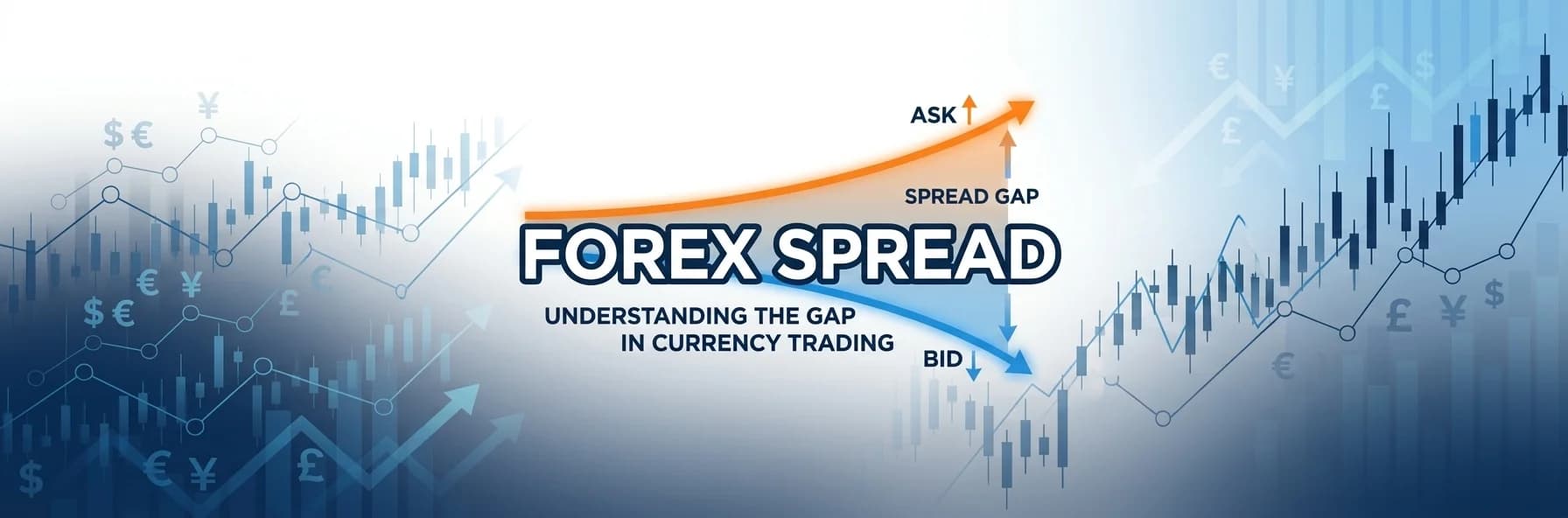
Forex spread is the difference between the buy price and the sell price of any trading instrument, and it is the cost you pay every time you open a trade.
When I first started trading, I had no idea what spread was. For the first couple of months, every time I opened a trade it would immediately show a small loss. I thought price was just moving incredibly fast the moment I clicked buy, like I was always a split second too late.
I was wrong. It had nothing to do with timing. It was spread. And nobody told me.
If you just opened a demo account and you are seeing the same thing, this article is for you.
Key Takeaways
- Spread is the built-in cost of every trade. It is the gap between the buy price and the sell price, and it is charged automatically the moment you open a position.
- A high spread means you start every trade at a loss and need price to move in your favor just to break even.
- Spread is not fixed. It widens during news events and can trigger your stop loss even when actual price has not reached your level.
- Comparing spreads between brokers is a good first step, but it is not enough. Execution quality and support matter just as much.
- The best way to evaluate a broker is to test them with a small deposit, run a few trades, and withdraw. If the money arrives quickly and support responds properly, that tells you more than any number on a comparison chart.
What is Forex Spread?
In the forex market, every time you open a trade, there are two prices on your screen: the buy price and the sell price. They are never the same number. The difference between them is the spread.
That gap is the cost of entering the forex market. No invoice, no separate line item. It comes out automatically the moment you enter a position.
Here is the simplest way to understand it:
Imagine you are trading gold (XAU/USD). On 1 standard lot, 1 pip of movement equals roughly $1. Now say your broker has a spread of 12 pips on gold.
The moment you open a BUY trade, you are already sitting at a $12 loss. You have not done anything wrong. Price has not moved against you. That is just what the spread costs.
For you to break even, price needs to move 12 pips in your favor first. Only after that do you start making money.
Now imagine a broker with 0 spread on gold. You open the same trade. You are at $0 immediately. No deficit to recover before the trade can work.
That difference adds up across every single trade you take.
Why Beginners Miss This
Most beginners, myself included, never question that little minus sign at the start of a trade. The platform loads, you hit buy, you see -$8 or -$12, and you assume price just moved fast.
It is not price. It is the cost of entering that market through that broker, on that instrument, at that moment.
The reason this matters is that spread directly changes your win condition. If your strategy targets 20 pips profit and your broker charges 12 pips spread, you need price to move 32 pips total before you are in profit. That is a completely different trade than what you planned on paper.
Spread Changes, Especially During News
Spread is not a fixed number. Most beginner articles skip this part entirely.
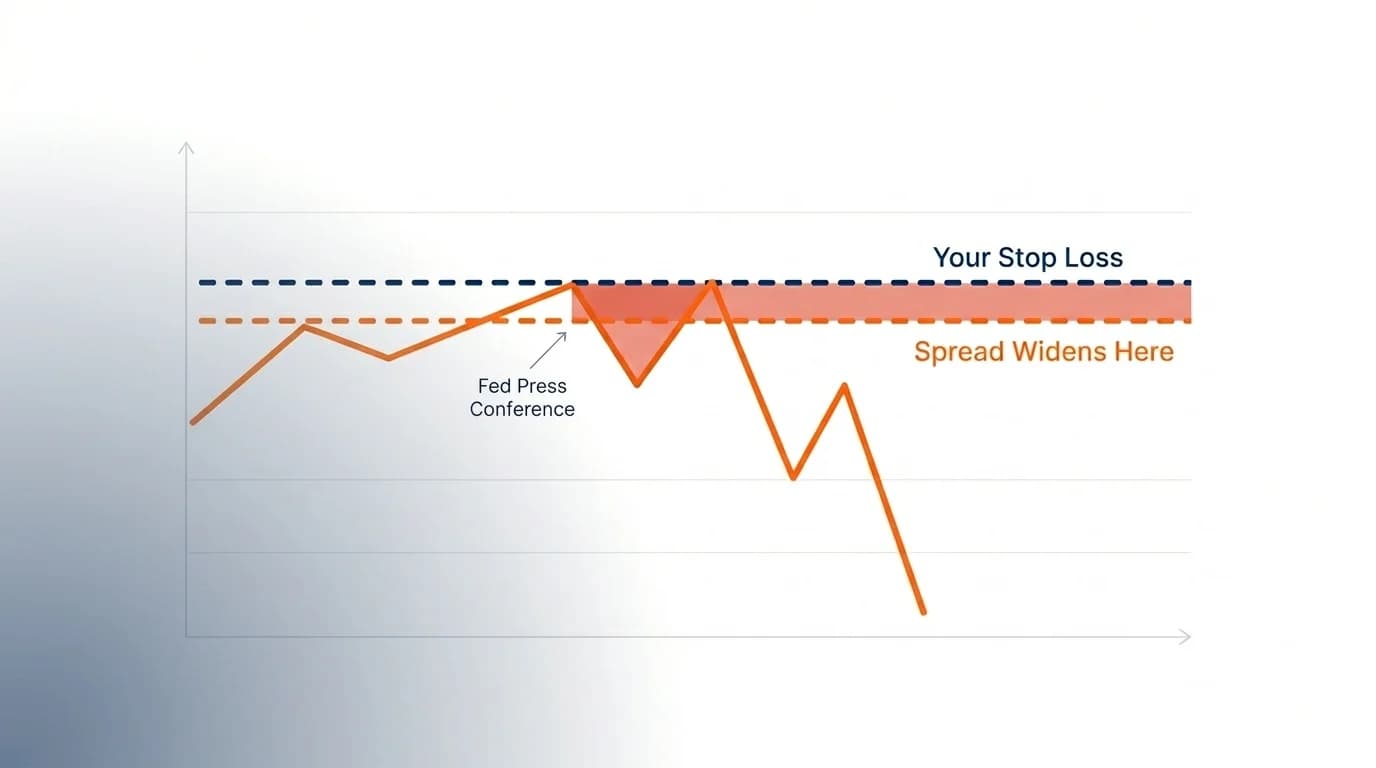
During high-impact news events like NFP, CPI, or a Fed press conference, brokers widen their spreads. Sometimes by a lot.
This matters beyond just costing you more when you open a new trade. If you already have an open position with a stop loss set, a widening spread can close that position even if actual market price has never reached your stop loss level.
Your stop loss sits at a level you calculated as safe. The spread widens. The effective execution price crosses your stop loss. Your trade closes at a loss, and then price recovers and moves exactly where you expected it to go.
You were right about the direction. You still lost the trade.
I have seen this happen on gold during a Powell press conference. A SELL position with a stop loss that looked completely safe. Spread widened aggressively right as the conference started. The position closed at a loss. Then price dropped exactly as the trade was meant to profit from.
That is not a trading failure. It is a broker conditions failure. And you can prepare for it once you know it exists.
Why Low Spread Is Not the Whole Story
After I understood what spread was, I did what most traders do. I opened accounts at six brokers. Then I started comparing their numbers at different hours to find the lowest one.
That is a first step. It is not the end goal.
Here is what I would tell a beginner doing the thing right now: do not make spread your top priority. Focus on safety first.
What does that mean in practice?
Before you give a broker money ask yourself: if the spread suddenly gets bigger and hits your stop loss what will they say?
If something goes wrong with your trade can you reach someone who actually cares?
Or do you get a reply that ignores what happened?
You should test this before it matters. Open an account. Put in an amount. Run a few trades. Then take the money out. See how long it takes. See how support responds when you ask a question.
If the withdrawal comes in 30 minutes or less that tells you something. If support takes your question seriously that tells you something too. Both matter more than saving 2 pips per trade.
A broker with a higher spread but honest execution and real support is worth more than a broker, with the lowest spread who goes quiet when something goes wrong.
How to Actually Test Spread Before Committing
Before you put real money on the line, open a demo account and use it specifically to watch spread in action.
Check the buy and sell price on a few instruments at different times of day. Look during the London session, the New York session, and around major news releases. You will see the numbers move.
On gold specifically, watch what happens around news hours. You will see spreads widen in real time. Experiencing that with no money at stake is worth more than just reading about it.
When you are ready to go live, start small. Do not put everything into one broker. Trade a small amount, test their conditions across different market hours, and evaluate before you scale up.
A Note on Gold Spreads
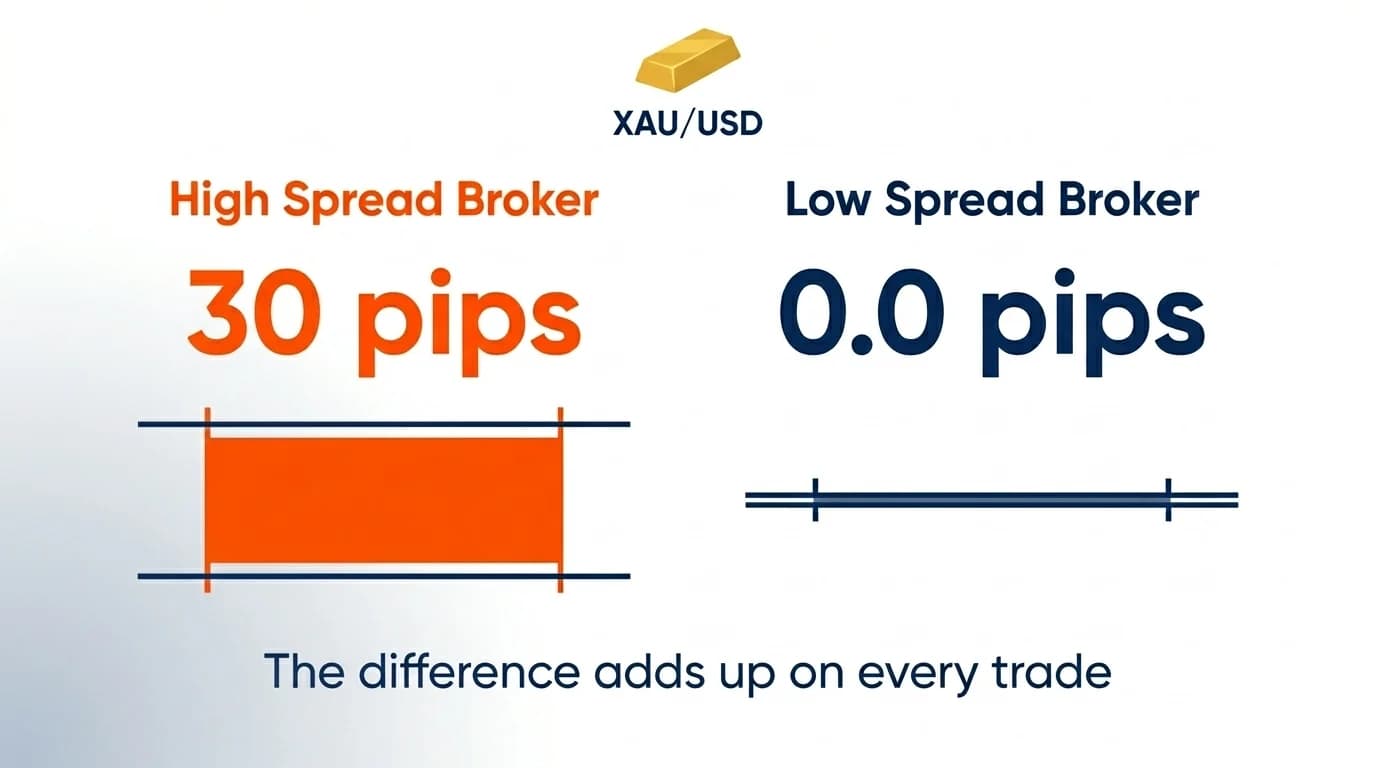
Gold (XAU/USD) is one of the most traded instruments among retail traders, and its spread varies a lot between brokers. Some charge 30 or more pips on gold. Others have accounts built specifically around gold trading with spreads starting at 0.0 pips.
That difference is not small. If gold is part of your trading plan, the spread on XAU/USD is one of the first things worth checking. On a frequently traded instrument like gold, it adds up fast.
Some brokers, like eplanet, offer accounts built specifically for gold trading with spreads from 0.0 pips. Worth knowing that option exists when you are ready to move past the demo.
Frequently Asked Questions
What is spread in simple terms?
Spread is the difference between the buy price and the sell price of a currency pair or instrument. It is the cost you pay to enter a trade. A spread of 12 pips on gold means you start every trade $12 behind on a standard lot and need price to move 12 pips in your favor just to reach zero.
Why do I see a loss the moment I open a trade?
That is the spread. It is not price moving against you. It is the built-in cost of opening the position. Once price moves far enough in your direction to cover the spread, you start making money.
Is lower spread always better?
Generally yes, but not at the cost of everything else. A broker with a very low spread but poor execution, slow withdrawals, or unhelpful support can cost you far more in the long run. Test the full picture before deciding.
Does spread change during the day?
Yes. Spread is tightest during high-volume sessions like London and New York when many traders are active. It widens during off-hours and during major news events. Always check spread at the time of day you actually plan to trade.
Can spread trigger my stop loss?
Yes. This is one of the most important things a beginner can learn. If spread widens significantly while you have an open position, the effective execution price can cross your stop loss level and close your trade, even if actual market price never reached it. Be especially careful leaving open positions during high-impact news events.
What is a fixed spread versus a variable spread?
A fixed spread stays the same regardless of market conditions. A variable spread changes depending on liquidity and volatility. Variable spreads are often lower during normal conditions but can widen sharply during news. Fixed spreads give more predictability but are usually higher on average.
How do I check a broker's spread before opening an account?
Most brokers display their spreads on their website under account types or trading conditions. You can also open a demo account and watch the live spread on the instruments you plan to trade. Demo spread numbers are usually close to live conditions, though not always identical.
Conclusion
The spread is the real cost that every trader has to pay and most people who are new to trading find out about it in a difficult way. They open a trade. Right away they see that they are losing money and they do not understand why this is happening.
Now you know what is going on. The spread is the difference between the price at which you can buy something and the price at which you can sell it. This difference is taken away from you automatically. It can change when important news happens. If the spread gets big enough while you have a trade open it can close your trade before the price even gets to the point where you wanted to stop losing money.
Understanding the spread is not about knowing what it means. It is also about picking a broker that has rules that work well with your trading plan. If you are trying to make a profit of 20 pips. The spread is 12 pips, that is a big deal. It changes the way you think about the trade.
Here is some practical advice. Use your demo account to see how the spread works at times and when important news is happening. When you start trading with money start with small trades test the broker to see how they do and pay attention to how they handle problems. Do not just look at the number they advertise.
The spread is important. It is also important to think about what happens when things do not go as you planned. The spread matters,. So do many other things, like what your broker does when you need help.